

Dr. Holly Lofton entered obesity medicine around 2011, when the field was small, the medication options were few, and bariatric surgery was the main treatment.
Today she is a clinical associate professor of surgery and medicine, director of the medical weight management program at NYU Langone Health, a principal investigator on industry trials, and a consultant who helps other practices add weight management. In Part I of our conversation, we focus on how she built that foundation inside an academic medical center: the personal history that pointed her toward the field, how she created new programs and earned institutional backing for them, how a physician becomes a PI on industry trials, how speaker bureaus work, and what it takes to add a weight management service line to an existing practice.
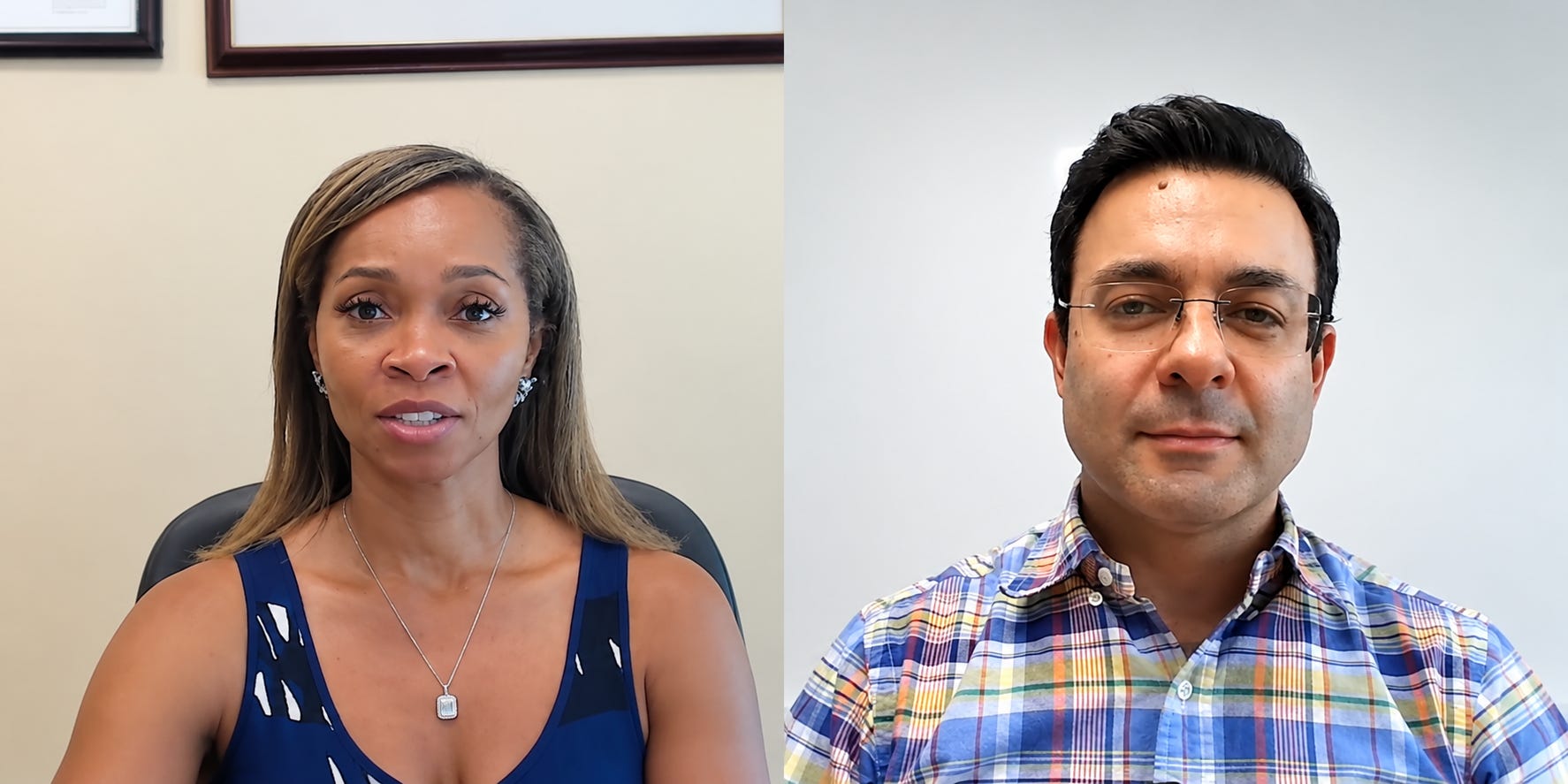
Physician Vantage Studio - Interview 05 - Dr. Holly Lofton, Obesity Medicine Specialist and co-founder of New York University's Comprehensive Program on Obesity - Part I
Scott F. Cameron, MD: Hello, it’s good to have you here today, Holly.
Holly Lofton, MD: Thanks so much Scott. I’m excited to be here.
Scott F. Cameron, MD: All right, wonderful. So can you tell me a little bit about yourself and how you practice these days?
Holly Lofton, MD: Yes, so my official title is I’m a clinical associate professor in departments of surgery and medicine, and administratively I am the director of the medical weight management program at NYU Langone Health. I also have a consulting business where I help practices integrate weight management into their practices that are already existing, as well as do education about weight management, weight bias, and weight stigma.
Scott F. Cameron, MD: Wonderful. Great. That sounds like a lot of different roles and I’d love to get into that in the conversation. So you mentioned that you’re an expert in obesity medicine, and I understand that you got into that back around 2011, when it was still relatively small and not as well known as it is today. A decade later, it’s become very popular. I hear a lot about obesity medicine, lifestyle medicine, preventative medicine, longevity, et cetera. What drew you to that field back then, and what were other people talking about at the time when you went into it?
Holly Lofton, MD: So my interest in weight management started even before I had graduated traditional school. I had childhood obesity, which I consider to be in remission. I was able to lose weight with the help of my mother in a community-based weight loss program over the period of a summer. So when I went back to school the next year, the students and the teachers treated me more favorably, and I liked the way that felt. And down the line I realized there were health implications that were positive for that. So I really dedicated my life to keeping the weight off myself and helping other people feel that way. So as I entered college and medical school, I said I wanted to do something with helping people lose weight. And during college that meant biology classes, nutrition classes, and I actually became a certified fitness instructor, sort of like when you go to a fitness class. And I integrated that into the things I did in medical school, helping people just stay healthy, because that was an interest of mine, and because obesity medicine as a field did not exist at the time. I said, I’m going to create it and I’m going to have medicine with the intention of - not even about prescribing medicine, practicing internal medicine, primary care - but with emphasis on nutrition, behavioral change, and lifestyle to help people improve comorbidities they may have, whether they’re weight related or not.
And then right when I finished my residency in internal medicine, there were two obesity medicine fellowships in the country. So I applied to both of those, and I actually got into both of those. And I preferred to do the one in Pennsylvania because I went to college in Boston and the other one was in Cambridge - if you know this school called Harvard. But I wanted to go where there was a high prevalence of obesity to practice obesity medicine. And it’s very interesting - when I graduated my residency and they had everyone cross the stage, the dean said what everyone was doing next, and she actually said, “We’ve had no one go into this before - she’s going to do an obesity and nutrition fellowship,” and everyone was kind of aghast.
That was one year, and at the end of that time I became the fellowship director because of my enthusiasm about it. So again, teaching other people about obesity as a disease - at that time we just had a few medications, just two. Bariatric surgery was the primary treatment for weight management at that time, so I thought about that, and just general nutrition. So I always try to integrate that into what I’m doing. And then things have developed over time since 2011, including having obesity medicine boards, different types of tests, examinations and trainings. I’ve been involved in that too.
Scott F. Cameron, MD: Wow, that’s amazing. It’s like you’ve been involved in almost the full life cycle of obesity medicine, back from when it was relatively obscure and just kind of starting out to be a sub-specialization of internal medicine, all the way to present day when you’re a leader in the field. And to see that personal experience that you’ve weaved through the entire training and career - that’s so interesting. So I love that backstory, and I feel like you kind of know everything one could possibly know about obesity medicine and how to deliver that care to patients that need it. So that’s very interesting. Now jumping to your current academic position - I understand that you have created a few different programs, including the medical weight management program. You’ve created something called the New U Curriculum, as well as the Comprehensive Program on Obesity. You talked about the fellowship, and you created all of those inside the academic infrastructure instead of leaving to build it elsewhere. How did that take place in terms of being an internal builder? And how do you get an academic medical center to say yes to those types of projects so that you can expand end your career that way?
Holly Lofton, MD: Well, I think it has to do with having the support at your academic institution, because I’ve run into some other physicians who have similar interests of mine but didn’t have the support, and it just didn’t go well. They didn’t feel that they were able to thrive or grow. So I think choosing an academic institution, or going out on your own if you don’t have the support that you need, is really a decision a lot of people have to make. And that’s why I can start in my consulting business - how do I take this information from a course or a book and translate it into a practice that is actually helping people with weight loss and weight management? And I think that comes from the fact that when I was in fellowship we had two medications that weren’t really approved by the insurance that my population was using primarily, and most of them were getting bariatric surgery. But in the period of getting bariatric surgery, there was a requirement for weight loss. So to help these patients with BMI 40 and up, which we have many of, I developed a diet plan to help them lose weight, at least to get them to the bariatric surgery. And with having interest and that experience in doing that, that’s where I created the New You program, which is essentially a physician-supervised medical weight loss program to help with significant weight loss. I mean, we’re getting in a 12-week period 40 pounds or so on average with medical supervision and support with dietitian help, but it takes an institution to say, “Yes, I will let you try this out. Yes, it may not make money initially. Yes, it may take from the surgeon’s volume, and I’m going to give you some dietitians to help you out to really help with that.” So I definitely don’t work in a silo - I have the support of the institution, saying, “Let’s give this a try,” and then when they were able to see the benefits of it - not solely financial or even the weight loss benefits, but how that helps other providers have fewer cardiac issues, diabetes issues, etc. - we see how it comes full circle, and thus the weight management practice flourishes.
Scott F. Cameron, MD: Yeah, very interesting. So that’s fantastic that you have the support of your institution, and then you successfully developed one program, then another, and then another. You mentioned that there’s definitely a difference between institutions in terms of how they support you and what’s available, and of course, that’s to be expected. What have you learned from your peers at other institutions that might not necessarily have the same degree of support, or maybe they hit some roadblocks or some challenges? What are some strategies that you’ve seen them use to be successful, if any, in sort of working around those barriers to launch programs like you’ve launched?
Holly Lofton, MD: Well, I think one thing with weight management is it’s hard to prove that you avoided a negative outcome, because it didn’t happen. So when you look at the grand scale, we’ve got these dashboards of cardiac admissions, cardiac deaths, and also utilization of services like labs and imaging across other practices. That’s where the institution, on a grand scale, can see the benefit of something like weight management that may not be the most lucrative in the beginning. And it takes partnering with - I like to call it a champion - and every other department will say, “Yes, she helped my patient get rid of their fatty liver,” “Yes, she helped my patient get rid of their diabetes.” For you to have that support - and I think that’s something that really grew as the Medicare guidelines moved toward lowering BMI prior to knee replacements and hip replacements, and said, “Well, how are we going to do this?” Rather than not do surgery, we need to find some place where we can actively expect these patients to lose this weight so we can do our knee replacements, our other surgeries that are necessary. And I think that’s where the advent of weight management has really come to - that we do have safe, effective options for significant weight loss and weight maintenance. And a lot of that is seen from the outside - not so much from the weight management practitioner directly, but they’re beneficial, so people start to - not only the patients, but other providers - start to value the weight management practitioner, because they’re not doing that on their own. The surgeons are doing surgery, the cardiac specialists are doing procedures. So it’s helping other practices out.
Scott F. Cameron, MD: Yeah, interesting way to frame it. So basically, in addition to trying to promote it yourself, try to ally support from other departments and help people look at it in terms of the big picture - how other departments are being affected as well by these initiatives. So very interesting. So kind of bringing other people into the fold.
Holly Lofton, MD: But also, I think it’s important to be proactive too, because NYU is a huge institution. So in the beginning I sent out letters to all the department heads saying, “Hey, I’m here to help your patients lose weight,” and to advertise yourself to say, “I’m here to help you do the part that you don’t want to do, but it’s necessary for your job to work well,” so that they’re aware. Because people - I’ve been here almost fifteen years now, and someone will say, “I didn’t know you existed.” So it takes some self-promotion at large institutions and within the community.
Scott F. Cameron, MD: Yeah, that’s a great point. And then I also understand that you’re involved very significantly in some research and some clinical trials - you’re a principal investigator on a few significant trials, and some physicians don’t have an idea how someone becomes a PI on landmark industry trials. How did that path open up to you, and what does that require on a week-to-week basis?
Holly Lofton, MD: Well, I think with the clinical trials that I’m doing, because they’re looking at mostly novel medications for weight management, it comes from having a relationship with the sponsor. And the sponsor tends to be large pharmaceutical companies that want their drug investigated in a clinical setting - that’s how drugs get on the market. So in my prescribing practices, and in my outreach and speaking about weight management and weight management medications, my name’s sort of floating out there with the pharmaceutical companies. And then the way that we obtain the research is someone from the company may come by and say, “Hey, I want to hear about your practice - can I come see it, can I come tour it? What resources do you have? Do you have a lab for shipping, and someone to help out, and databases?” And they do what’s called feasibility, for you to run a study. And if they determine that it’s feasible for your site to do so, then they give you a small study, and those studies can get bigger and bigger based on your performance. So they’re looking at retention - if you had 10 people in the trial, did you keep all 10 in there for the three years, or did they all drop out? They look at the statistical analysis - was everything done well? Did you get the adverse events documented in time? Did the patients meet the criteria - did you enroll incorrectly? So it’s not only obtaining the research from a feasibility standpoint, but making sure that you help the trial out in answering the research question, and that you didn’t just do it to check off a box for your resume.
So what that entails on my end - I have a research team. It’s a small team, about one or two people actually helping me with entering data, but we have a backup PI in case I’m out that day. And of course we deal with the IRB, all of that technical information is involved, a lot of paperwork, and then reporting information back to the sponsor. So that again takes a team - I definitely don’t work in a silo. And so I take time before and after patients, and on my administrative days, to really look at the quality of the research.
Scott F. Cameron, MD: Yeah, interesting. And then of course the research in and of itself has value in terms of the discoveries made and the impact that it can have on patients. What have you seen has been the impact or the benefit for you to integrate this type of thing into your practice? What’s the change that’s been for you?
Holly Lofton, MD: Well, I think it’s just very rewarding - one, to practice weight management, but also to offer potentially novel therapies to patients before they come on the market. Now usually we’re doing phase two or phase three trials, so it’s not the first time the medication’s ever been tested - we’ve already determined it’s safe and efficacious. It’s for a larger population or a special population. So for those patients I have who come in and say, “I don’t have access to a medication,” or, “I tried these other medications, they didn’t work” - you may be a candidate for a clinical trial. Similar to how that happens in oncology - a person comes in with essentially no response to the usual therapy. Well, we have a clinical trial that you could try. And through that we develop relationships not only with that individual research participant but with their family members, and we can see their outcomes, which are usually positive. And with that comes publications, and that’s another way to get both your institution and your name into the scientific journals, which then can lead to other opportunities.
Scott F. Cameron, MD: Yeah, amplifies your visibility. Very interesting. Great. So related to amplification and visibility, I understand that you do a decent amount of speaking and that you’re on some speaker bureaus. Talk to me about that - how did that all get started, in terms of becoming part of a speaker bureau and getting these speaking engagements?
Holly Lofton, MD: So from the speaking perspective, I do speaking both for pharmaceutical companies and then my own speaking to the community. So I want to make that clear - my speaking is not solely to promote weight loss drugs the way the pharmaceutical companies do. But that is what a speaker bureau is - they bring you in, they train you on the slides, particularly the way the FDA has said they could be presented, and it’s very much built on compliance and getting other providers to come to a session where they want to hear you talk about that drug the way the company wants you to.
Now I also do a lot of speaking on my own, to community groups - of course educating other providers, students, residents, fellows - and for example I spoke with 100 Black Women, and I’ve spoken with runners’ groups about nutrition for running a marathon. So integrating some of those special topics in ways they can help the community is one of the things I really enjoy, because I always feel like when I come to work and see twenty-three, twenty-five patients in a day, I walk outside and feel like I didn’t do enough. And it’s always been my goal to go to, as I call it, the mountaintop and scream my message. And that’s what I’m able to do with public speaking, doing social media, and even writing articles, because more people can receive those messages than I can reach on an individual basis.
Scott F. Cameron, MD: Yeah, that’s fantastic. And I love how you have this dual-armed approach where part of it is educating physicians and part of it is educating the community and the general public, right? So you’re kind of wearing two hats - your doctor’s hat, and then also the human hat, helping others more broadly. So Holly, if somebody came to you and said, “I want to be involved in a speaker’s bureau, I want to speak for industry partners” - and it doesn’t even have to be weight management, it could be any other specialty - what would your advice be to them on how to get started with that?
Holly Lofton, MD: Well, I would say look at the field that you’re in and what you feel comfortable speaking about. So if it’s a device, if you’re a surgeon, or a drug, if you’re a cardiologist - you want to believe the message before you go out and speak to thirty people at night. I think that’s the first thing - I don’t say yes to every speaking engagement I’m asked to do. And then the first step would be to contact that pharmaceutical company. Usually every drug that’s pretty new on the market has a pharmaceutical rep that comes around, and they want to know: what’s your prescribing practice, how knowledgeable are you about this, and do you have experience to teach others? That’s what they want to look at. I think to some degree they look at how much you prescribe medicines, but also what does your clinic look like and are you reputable - and then they can recommend you for the speaker’s bureau. But that usually goes through a pharmaceutical rep’s recommendation to their higher-ups about who gets to the speaker’s bureau.
Scott F. Cameron, MD: I see, okay. But you feel like that can originate through cold outreach from a physician - reaching out to that representative and then positioning themselves in the right way and talking about the context of what they do and what’s happening in their clinic.
Holly Lofton, MD: Absolutely. And then they tend to be ongoing, because drug companies have different drugs and they want you to do it the next year - that depends on your performance the initial year. What they don’t vet is how well you can speak - they don’t know how well you speak until you’re on their team. So it’s not as if you won rhetorical contests and that’s why they’re calling you - they’re looking just at your general community presence, how comfortable people feel with you, your ability to answer questions, those types of things as well.
Scott F. Cameron, MD: Yeah, okay. So are those the things that you think make someone good at it? What would you say makes someone good at being a speaker on a speaker bureau?
Holly Lofton, MD: I think it takes more than reading the slides. I actually don’t like when you read the slides, because we can all read - it’s about making the information that’s presented scalable and integrated, able to be integrated into your clinical practice. So we can look at graphs all day long from clinical trials, but if you can say, “Well, looking at this percentage versus this percentage, ten times more of your patients can get greater weight loss by using medication if we do these things,” and then integrating your clinical experience into that - I think that’s really what makes a good speaker: here’s the data, and this is how you can use it on a day-to-day level to help people.
Scott F. Cameron, MD: Yeah, great. So I want to ask you a bit about teaching physicians the business side of things. I know you’ve given some talks on subjects like adding weight management to your practice. What have you learned from physicians about why they might hesitate to add a service line, and what actually works when they try to do that?
Holly Lofton, MD: Well, I think one thing people must understand - and it’s an unpopular way of doing it - is saying, “I’m going to do one day of weight loss and add it to my other practice.” It really becomes a full-time position for someone. So if it’s not you - say, the cardiologist doing it - then hire a nurse practitioner or someone who’s a champion for weight loss, because it’s really not something you can do part-time. There’s the volume of patients, but also just the need for follow-up with weight management is so much - you need to see patients at least three, four times a year, and whether that needs to be telehealth or in person, I think that can be leveraged so that the doctor doesn’t have to be in clinic all the time or pay for overhead space. That’s something to really think about. And there are different models - some people are cash-only, some people do commercial insurance, and then there’s also leveraging - is there any procedure I might be able to perform to help make the business money? And those can be done either with some specialized diets and ways that we use those, or with doing other procedures that are billable.
Scott F. Cameron, MD: Interesting. Okay. And I like how you made the point that you have to be strategic about how you layer that onto your practice. You can’t just sort of add a new service line and not think about how you’re going to staff it, how you’re going to bring resources in, the follow-ups that you talked about that are necessary - all those different pieces of the infrastructure make a big impact on how you experience the clinic, and then indirectly how the patients are going to experience flowing through your clinic, right? Because if you’re just a doctor that’s absorbed more volume, but it happens to be some weight management, you just might be kind of running around and more busy. But if you’ve made adjustments or put in those resources, then it can all work synergistically, right?
Holly Lofton, MD: Exactly. And I always tell a client who’s looking to add weight management - look who’s around you, just a neighbor. What other providers are there that could benefit from weight management, and go around and tell them that you’re doing weight management. Tell ortho, tell plastics, tell the endocrinologists that don’t do weight management, that I’m here to do that service that you may not have time for. And then after that, weight management blossoms really quickly, because there’s word of mouth from patients. Patients are happy, they tell their families, friends, coworkers, and then that’s why you can’t do it one day a week - because everyone will pour in, which I think is a great thing.
Scott F. Cameron, MD: Exactly right. Yeah, then business will be booming.
Coming next in Part II: Dr. Lofton explains how advisory roles with digital health companies find her, and several told her they started with an AI search. We talk about how she weighs an established industry player against a startup, and why she says to keep your day job until something else is secure and “have your feet in both buckets.” She also walks through the structure of her week, from clinic days to national media appearances, and shares her advice for a physician who feels they have hit a ceiling five years into practice.
Scott F. Cameron, MD is a practicing radiologist, AI implementation leader, angel investor, and MRS Past President. He writes about physician career design at Physician Vantage Studio.