


Walking with friends and family along the rocks in Gloucester, MA
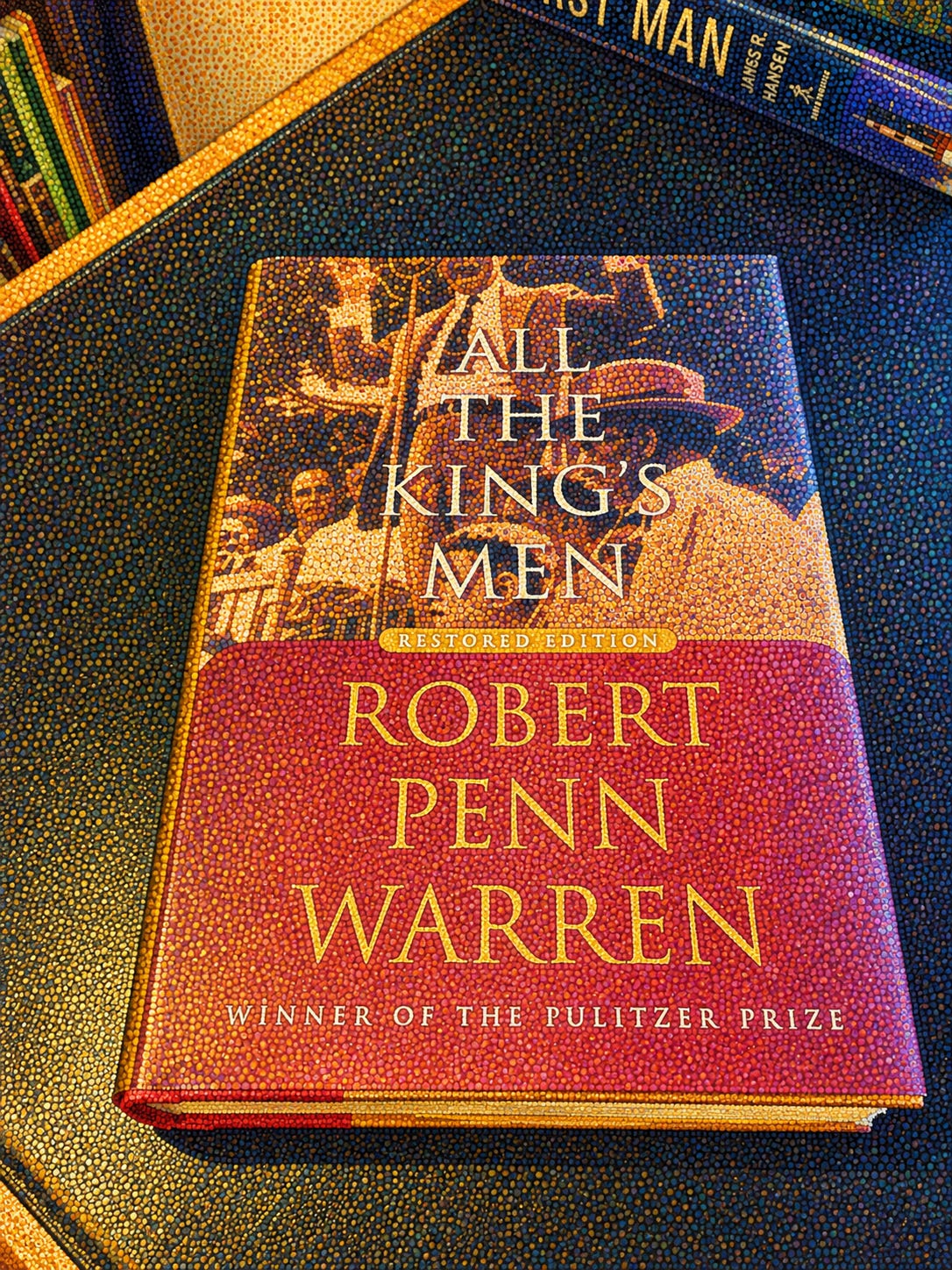
I had the good fortune of traveling with my family recently, in the embers of the remaining days of summer, to Gloucester MA. We stayed with friends at their summer home, an airy, expansive retreat set up high on a grassy and rocky bluff overlooking the coast, where boats dotted the water. On the first day there we all sat together on the couches in the living room, snacking and lounging while the kids played outside, and as I surveyed the room while we were still settling in, my eyes drifted to the books resting on the coffee table in front of us. One book on the bottom of the shelf caught my eye - All the King’s Men, by Robert Penn Warren. As I picked it up and ran my fingers along the sheen of it’s cover, I smiled as I recalled reading this same book, many years ago, when I was in high school.
The interesting thing is that I don’t remember much of the content of the book at all. But what I do vividly remember is how much I loved reading those novels and dissecting them in conversation with my classmates and teachers, all of us arranged around an oval table. The curiosity, the learning, and not knowing what was around the bend on the next page - all of these held my fascination back then, and they do today. It also made me think of my love for reading overall - how I enjoyed (pre-kids) reading the WSJ weekend edition on Saturday mornings with a cup of coffee - and how my love for reading is in many ways a proxy for my curiosity.
A lot of physicians are curious by nature, and even thinking back to medical school interviews, there are many questions that specifically aim to learn how broad, curious, and well-rounded a potential doctor candidate is: ‘tell me about the most interesting book you’ve read recently’, ‘tell me about your semester abroad’, ‘what was the biggest challenge you’ve faced and how did you come up with a solution for it’, and so on.
But as time goes on, these facets of our personalities and lives start to get crowded out with the demands of medicine and of life. So there’s a paradox - medicine attracts some of the most curious people around, but then - over time - methodically narrows them. It’s a gradual shift, and in many ways one that’s necessary, but it results in changing the way we think and operate - but as I’ll explore here, there is a way to re-introduce that curiosity and that range into our professional portfolio.
Narrowing isn’t necessarily wrong, and actually in a lot of ways, it’s exactly what medical training is supposed to accomplish - taking someone who’s broad and teaching them to focus intensely on a given set of subjects to develop real expertise. The problem comes when we assume that a necessary period of narrowing has to propagate into the rest of our careers.
From the outset, medicine doesn’t actually select for narrowness - it actually rewards those who are more than just academic stars - committees love uniqueness as well as well-roundedness, and if you have something really novel - let’s say a ‘Program II’ major, offered at some undergraduate institutions, where you can create your own hybrid bespoke major, you have the potential to really stand out. If you’ve done research in an unrelated field - all the better. If you’ve spent a year volunteering somewhere, building a program, championing a cause - all of this speaks to individual breadth and helps get your foot in the door. These versatile, creative, and bright people tee themselves up well for admission to medical school.
Going through medical school, though, a shift happens - the intensity and dense curriculum and rotations become all consuming, and require almost all attention and focus that’s available (above and beyond core relationships, existential needs, etc). And so those activities that were part of who you are start to get crowded out one by one - maybe there’s no time to practice the piano, or work on that screenplay. The pick up basketball games might need to go. And at the same time, the way we’re evaluated in pre-clinical and clinical years depends on our depth - how well do you know the material and the skills? Also, there tends to be a consensus from mentors and teachers to stay focused on one’s coursework in order to get the high marks, learn the core curriculum, and set oneself up for the next step in the journey - those other aspirations, such as writing, innovation, etc can come later on. Ultimately, it’s not a single choice that narrows the personal and professional life - it’s the sum total of many decisions, all of which make sense in the moment - and realizing that your peers are making the same ones.
There’s a price we pay for all of this.
One of the biggest ones is the ability to not have guilt about being interested in something for it’s own sake - purely for curiosity or joy - instead of for a utilitarian reason. This human side of us - the creative, the curious, the spontaneous - gets suppressed to a degree. We might lose touch with the experience of being a beginner at something - and with this, paradoxically, losing some of the fun and satisfaction that comes from the growth and discomfort of being on that slope of the learning curve. Sometimes you even lose touch with part of your social circle that was part of that life - the running club mates you don’t see again, the improv and theater partners that you no longer banter with. Again, these are innocent casualties of a path that is shaping you to be the expert that you need to be.
But that curious part of you, the part that is expansive - is still there, and you can see glimmers of it time to time, like when I lifted up that Robert Penn Warren book in my hands and felt its weight, and knew - if I wanted to - that I could escape for a bit to read a few passages. You see it when you stack certain podcast episodes back to back and listen all the way through, when you collaborate on an opinion paper with peers from different institutions and you go deep - or even the food festival you went to this summer that you can’t stop talking about.
To reawaken this, think about what it was in your life that started to narrow down first - for example, that thing that you used to do, simply because you enjoyed it? If you have it, think about how to re-introduce a component of this at a small scale into your life. For me, it could be carving out 15 minutes at the end of every evening to read a short chapter in a fiction book. For others it could be sitting 10 minutes at the piano, with a YouTube tutorial on your tablet which is propped up on the stand. You’re essentially re-introducing this thing at the beginner level, and acknowledging that it doesn’t necessarily have to have a purpose with your current project or career.
The broad and curious person who became the doctor is still you - it’s just that medicine required narrowing certain parts - and you have to be the one to reintroduce the re-expansion. Then, your natural arc as you progress on your medical journey becomes something like this:
Explore many things → Narrow as medical training demands focus → Master the domain with clinical judgement and expertise → Expand as your accumulated assets provide you with new possibilities.
This four-part arc is helpful because each component has a purpose. In the Explore phase, breadth helps you discover who you are and what your innate curiosity leads you to. Narrowing allows concentration that results in real expertise. Mastery provides clinical judgment, relationships, credibility, and personal/professional capital. Ultimately, at some point down the line, those accumulated assets provide you with a way to expand once more - this time from a stronger foundation.
So expansion in mid-career becomes a byproduct of everything you spent the first half of your career building. It’s what all of that expertise now makes possible.
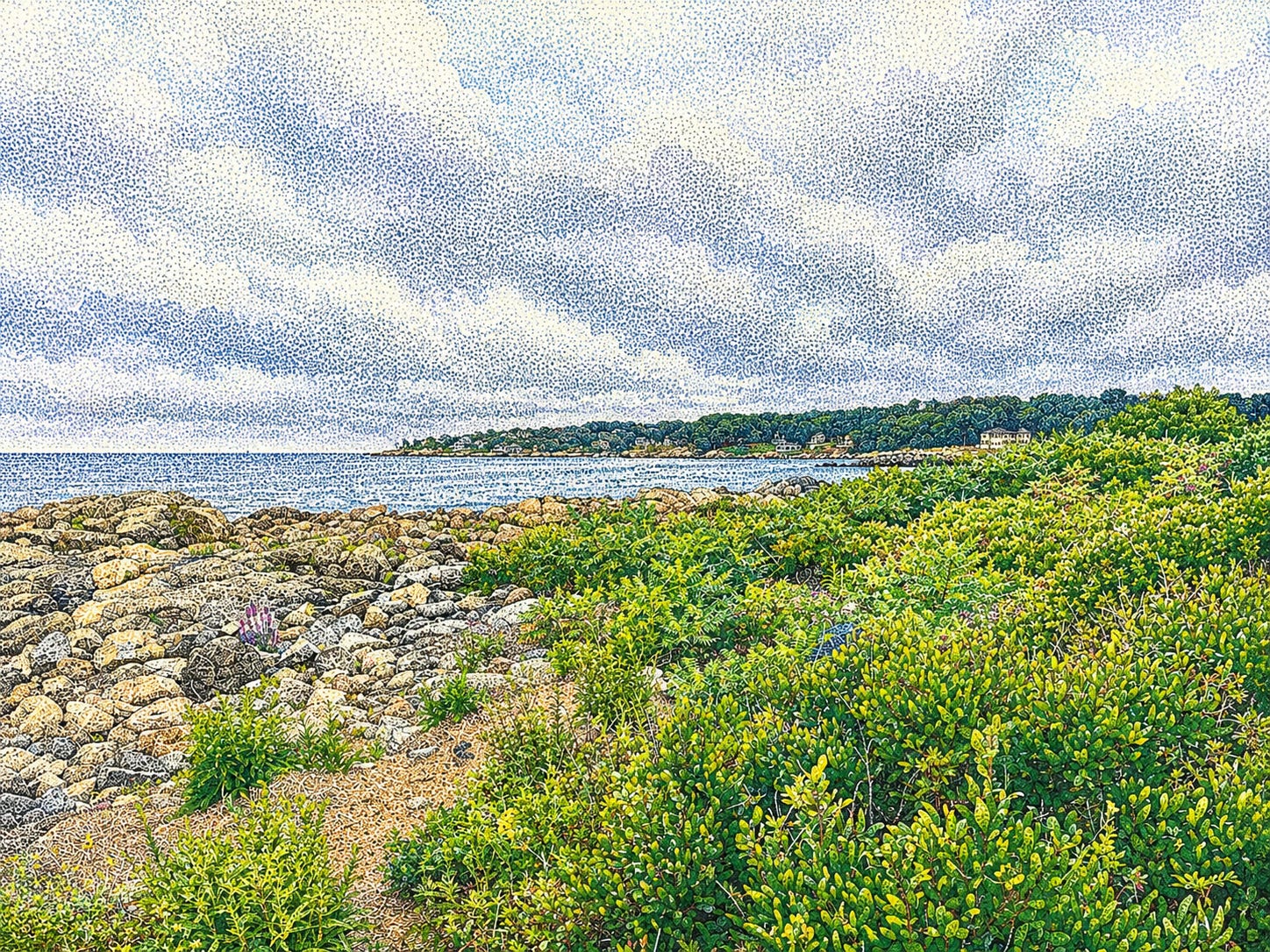
Walking along the seaside path in Gloucester, MA
As physicians we spend the first half of our career deliberately narrowing to build expertise. The opportunity in mid-career is to use that expertise as the springboard for expansion - wherever that curiosity and interest may take us. Perhaps it’s learning about AI, perhaps investing, teaching, podcasting, or leading an innovation project. Whatever it is, it’s re-discovering that part of ourselves that has been dormant - but that has been there all along.
This is also where curiosity can become an intentional part of career architecture. Once we hit mid-career, medicine has given us assets that we didn’t have when we started out, such as expertise, credibility, judgment, relationships, along with some degree of financial stability. We can take these assets and let curiosity guide us towards how to use them - all while keeping our clinical foundation intact.
So that curious young doctor who first put on that white coat years ago is still there - but the experience earned over the years have now given this person more skills, resources, and directions to explore.
What’s an activity you were curious about before medicine started the narrowing process? I’m curious; let me know in the comments.
Scott F. Cameron, MD is a practicing radiologist, AI implementation leader, angel investor, and MRS Past President. He writes about physician career architecture at Physician Vantage Studio.
Scott! I am glad I found this essay that you have written.
I am not a medical doctor yet..
I want to be a dentist 🦷 and I am in my second year in the university. The years where you are introduced fully to the complexities of anatomy, embryology and other dense medical subjects. I am not afraid particularly about this journey but I don't want to change who i am.
I want to keep writing on Substack.
I want to keep contacts with the little friends I am making.
I want to still read philosophy and psychology.
I have a chosen to major in maxillofacial surgery .. but I don't want to be known to the world as only that.
God help me haha .
Scott, I really appreciated this reflection. The idea that the first half of a career often requires narrowing, while mid-career invites re-expansion, feels true far beyond medicine. Many of us spend years becoming useful, capable, and specialized, then eventually realize there are older parts of ourselves asking to return: curiosity, creativity, play, learning for its own sake. That re-expansion feels less like starting over and more like becoming whole again.