

In Part II of my conversation with Dr. Jesse Courtier, we’ll learn about his perspective on AI and it’s impact of medical education and physician careers, including the potential problem of never-skilling, and he has a specific idea about how to fix it. We also move on from how he built his portfolio career to what he learned building it, and most of what he says travels well past radiology.
In Part II:
How to take real career risk in measured steps, and why going all-or-nothing was never a consideration
What changed in how he listens to mentors, and why he grew more comfortable trusting his own instinct over time
What separates physician founders who get traction from those who stall, and the hundred-interview exercise he recommends before anyone builds anything
Why he went back for an MBA after he had already founded a company and raised a fund
How he structures a week across evening clinical shifts, due diligence, coursework, jiu-jitsu and two kids, and why it stopped feeling like work
The workflow question nearly every non-clinical investor misses, and the financial question most physicians forget to ask
Where AI dollars in imaging are actually moving, and why some deployed tools stop working six months in
Why he protects a clinical anchor, and how any remote physician can keep teaching residents for a few days a year
The advice he would give his 2010 self, and the two screenplays still waiting on his desk
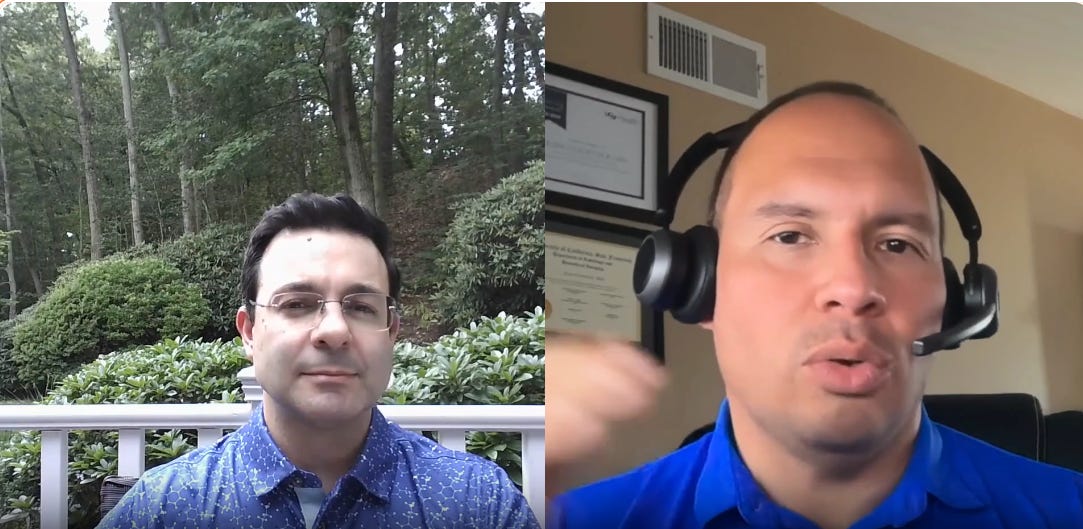
Physician Vantage Studio - Interview 02 - Dr. Jesse Courtier, Radiologist, Founder of Radiologue Ventures - Part II
Scott
When you’re evaluating a company for the fund, what questions do clinicians tend to ask that people on the finance side miss, and vice versa, what do finance people see that clinicians tend to miss? Give me your perspective, having sat on both sides of that table.
Jesse
Great question. One thing people coming from a purely finance or venture background, without time in practice, tend to miss is the workflow element. How does this integrate into a physician’s day-to-day? Does it require a complete workaround? Do I now have to open two new screens and copy-paste, or does it integrate seamlessly? It’s interesting - when you talk to purely technical people, sometimes they don’t even realize that’s a problem, or they think of it as a small detail, when it’s actually the biggest piece. Physicians are notoriously set in our ways, so you need something either so dramatically better that people say, of course I’m switching, or so seamlessly integrated that it just fits perfectly into the workflow. That’s one piece I see overlooked - how does this actually integrate into daily physician workflow.
On the flip side, there’s the actual financial impact. Sometimes we’ll see a great product that genuinely solves a problem and makes day-to-day easier, but cynically, that doesn’t necessarily resonate with the administrators holding the purse strings who have to write the check. Is this going to improve throughput? Bring in more cases? How does it actually impact the bottom line? Sometimes we think aspirationally that they’ll pay for it because it makes our day easier, but you need the finance lens too - is there a CPT code for this? Those are the pieces you might not see if you’re not looking through that lens.
Scott
That’s so interesting - as you pointed out, there’s real value in things that help diagnostically that don’t necessarily tie to something an administrator sees as ROI. I’m curious, of the investments coming to you in the AI-and-medical-imaging niche - are you seeing more attention and dollars going toward workflow adjuncts and solutions, or toward diagnostic tools? What trend are you seeing?
Jesse
It’s interesting - initially there was a lot of attention on the interpretive side, tools that help with interpretation, and a lot of investment went there. In some ways, being a little cynical, some systems adopt things just to say we’re using AI, we have the latest tools, and then it’s fire-and-forget - nobody checks whether the model is still working six months or a year after deployment. It’s in place, but it’s either not being used anymore, or the model has stopped working entirely.
I think we’re starting to see an early trend of more investment toward the underlying operational layer - things that can genuinely make a difference in workflow and the bottom line, and show measurable impact on throughput and care. People are realizing, this was cool to have, but six months later it doesn’t work, or we changed a protocol or upgraded software and it broke. So we’re looking for solutions with these deeper layers, under the surface, that actually make a bigger difference.
Scott
That definitely resonates with me as an angel investor - when you look at an opportunity, you want to ask how this fits into the long-term life cycle of a practice, a physician’s environment, the patients. Is it durable? Does it survive contact with reality, or does it fall apart? A great pilot presentation is one thing, but real-world deployment is another, and there’s a lot of intricacy in between. Really interesting to hear those trends.
I understand you’re also pursuing an MBA at the Gies College of Business at Illinois. After everything you’ve done - founding a startup, navigating FDA clearance, raising capital, founding a fund - what are you learning in business school that founding and investing didn’t teach you?
“Is it durable? Does it survive contact with reality, or does it fall apart? A great pilot presentation is one thing, but real-world deployment is another, and there’s a lot of intricacy in between.”
-Scott F. Cameron, MD
Jesse
That’s a great question, and I’ve gotten it from other people too. Part of it comes down to how I best learn things. I looked at the bigger programs - there are outstanding ones here in the Bay Area - but they’re also quite expensive, so I weighed cost against return. I wanted knowledge in things like accounting and operational management, which would be harder for me to force myself to learn through YouTube or a small course on my own. For that kind of material, I learn best when I have a grade on the line, a test to study for, assignments due.
It’s also an online format, much more affordable, but through a very well-respected university, and it lets me fit it into my day - listening to an article while my daughter’s at lacrosse practice, or during a dog walk. It’s not intrusive. And at the end of it, I’ll have a degree, which matters as I think about building a bigger fund down the line. Having formal training in accounting and operations lends a degree of credibility with large institutional investors. So I’m thinking about it long-term too - when I’m raising capital from bigger institutional players, having that MBA brings a level of credibility.
Scott
That’s a good point - it gives you the finance chops, but also that extra layer of credibility, to say, I actually know these fundamentals, with a credential to show for it, not just claiming it. Important message to communicate.
Walk me through the mechanics of a typical week for you. Between clinical work, deal sourcing, due diligence, advising portfolio companies, teaching, the MBA, and family, what does a typical week actually look like, structurally?
Jesse
I usually anchor my week around my evening clinical shifts - maybe seven to ten, or seven to midnight, depending on the school week too. I’ve got an eight-year-old and a thirteen-year-old, old enough now to be at school during the day. I might start a Monday morning with a school drop-off, and from there I’ve usually got meetings scheduled at least a week in advance. Then I start my day around whatever calls I have - a founder, a potential limited partner - and I also block time to write LinkedIn posts for the week, batching a set of ideas and scheduling them across different days.
I try to multitask where I can, pairing something like listening to MBA material with walking the dog, and I do a set of meetings for due diligence throughout the day. I try to automate as much as possible using tools like Notion and Gemini - I have a weekly digest set up through Gemini that surfaces the latest news on startups combining radiology and AI, and I actually found one of our portfolio companies that way, before they’d even spun out. I reach out and say, what are you working on, I’m interested, let’s chat.
I also manage a lot of email - I check it pathologically, very frequently. That happens throughout the day, and then I usually have dinner, spend some family time, and do a clinical shift, and that’s the day. I try to work in other things too, like jiu-jitsu, two or three times a week, so I have a balance of activity outside of just sitting in one room the whole time. That’s important given the other transition - going from a hospital, working with lots of different people, to a primarily remote setting. I like having a balance of human contact, whether over Zoom or in person, and spending time outdoors.
Some people say it sounds busy, but for me it doesn’t feel busy, because it’s something I’m genuinely interested in and excited about. It doesn’t feel like work - you’re not watching the clock thinking, when will I be done. That’s a great thing to have.
Scott
Not just passing the time. So the clinical shifts - are they all remote, and all in the evenings?
Jesse
Yes, all remote, all in the evenings, from home. I just fire up the workstation. They’re very structured about the shift times, and being part of a large group makes the flexibility much better. When I was in a group of six, as chief, if someone needed shift coverage, I’d often just take it myself. In a group of a hundred-plus radiologists, there’s a much greater degree of flexibility if you need to switch something around. And they’ve got the remote piece down well - I fire up the workstation, do my shifts, and I’m done. No pager, no coming in at 2am. That’s very nice.
Scott
Everybody loves that. Is it five days a week, or not necessarily?
Jesse
It varies. Sometimes five days, sometimes a series of shorter shifts across six days - seven to ten each evening - which breaks up the day and helps me balance things out. Overall it’s definitely manageable.
Scott
Do you ever miss the in-person experience of a typical hospital-based academic practice - seeing fellows, residents, attendings - now that you’re doing your clinical work from home? Or does the rich interaction you get from the healthcare innovation ecosystem more than compensate?
Jesse
Good question. Part of why I go down to Stanford, Lucile Packard, once a month is exactly for that - I do basically what I did at UCSF, sitting with residents and fellows, reading out cases. It’s a nice balance, and I spend a morning there about once a month. It’s nice to sit in the chair and teach a resident, share experience, show cases in an environment with advanced, high-level cases.
I do think you want some exposure to that. Someone else asked me about this too, and I told them: look at your local hospital if you’re in a remote position, because most academic places always need volunteer clinical faculty, and the requirements are usually pretty low - sometimes just four or five days out of the whole year - and you get a teaching appointment and time with residents. I definitely recommend that to other people.
Scott
Wonderful. In a typical week, does something ever have to get sacrificed - not enough room for everything?
Jesse
That’s a good question. I try to balance it out. There are times when downtime gets sacrificed - maybe I wanted to watch a TV series - and I’ll admit, sometimes I’ll just read the Wikipedia summary instead and figure I’ve got the gist of it, or decide I didn’t really want to watch it anyway. But for the most part, I try to balance physical activity, family time, work, and investing. It’s a heterogeneous day, but an interesting one for me.
Scott
Wonderful. I want to shift a bit to the impact you’re having, grounded in the reality that you’re still doing clinical work - something I believe is central to what informs us as physicians, that clinical anchor as the credibility for everything else built around it. When you think about your day-to-day and how you express yourself professionally, what would you say are your three core values, the ones represented in your work?
Jesse
One is curiosity - learning about new things, being open to the idea that my approach might not be correct, or that something’s worth diving into further. Having a curious mind. The other pieces are truthfulness and honesty, and a sense of morality - being forthright, whether I’m talking about my fund, a startup, or clinical medicine. Being transparent is really key, and morality, having a sense of when something doesn’t feel right. Those are the core pieces for me.
Scott
Interesting. In your day-to-day, alongside all your other work, how do you view clinical work as important to who you are and what you do? What does it mean to you to keep that clinical anchor?
Jesse
I still have a real passion for pediatric radiology. It’s not that I don’t enjoy radiology anymore - I still love reading cases, calling a clinician with a finding they weren’t expecting, helping guide and direct a patient’s care. That feels genuinely impactful and meaningful to me. Or catching a subtle fracture - after doing this for a number of years, I can spot a case that would be hard for someone else to identify, feel confident saying, yes, that’s definitely a fracture, here’s what needs to happen next. Helping guide the clinician in that way is really rewarding. It definitely informs my decisions as an investor and a mentor too.
Scott
Interesting. I’d be remiss not to ask about your perspective on AI, obviously the hot topic right now, and central to your world through the fund. What excites you about AI and medicine, specifically for radiology careers or medicine more broadly, and on the flip side, what worries you about it?
Jesse
Definitely, there’s a lot of exciting opportunity for improving day-to-day workflow, and also for democratizing imaging expertise. Some of the solutions we’re seeing take the accumulated experience of a wise, thirty-year practicing radiologist, essentially hundreds of years of collective experience and data, and spread it across multiple platforms, which can even out the playing field and improve patient care. Taking away the day-to-day mundane work and letting us focus at a higher level is genuinely exciting.
My concern is what I’d call a never-skilling problem. Those of us who trained before these tools existed built our skills the hard way. How does the next generation build the same intuition when the tools are already there? How do we train them to know when an algorithm might be wrong, rather than just trusting whatever the output is? You need the basic foundation to recognize when something isn’t right and needs a second look. Without that foundation, you’re just blindly trusting the output. That’s going to matter as we think about radiology and medical education, and finding ways to blend the two. One idea I’ve talked about is simulator time - using AI in a way that builds skill rather than replaces it, where it critiques and teaches the way I would when I started in radiology, walking through how I approach a case or think through a differential. That’s where I think guardrails need to be put in place.
“My concern is what I’d call a never-skilling problem. Those of us who trained before these tools existed built our skills the hard way. How does the next generation build the same intuition when the tools are already there? How do we train them to know when an algorithm might be wrong, rather than just trusting whatever the output is? You need the basic foundation to recognize when something isn’t right and needs a second look. Without that foundation, you’re just blindly trusting the output.”
-Dr. Jesse Courtier
Scott
It’s interesting you say that - it reminds me of an idea somebody mentioned, about designing medical or resident education, or even chatbots generally, as an adjunct or a tutor helping you, rather than an all-knowing entity that just hands you the answer. I share that same concern about experiential knowledge, and what happens to people who don’t get trained the way we were, learning things the hard way.
As a side note, there’s an interesting article I read in The Atlantic, I believe by David Brooks, arguing that we may increasingly be defined by our relationship to cognitive effort - almost as if society is splitting into two groups, one looking for the easiest way to an answer and using AI to minimize effort, and another using it to strip away rote tasks while deliberately preserving their relationship to cognitive struggle and hard work. It’s an interesting way to think about it - with knowledge becoming ubiquitous, how do you decide how and when to use it, and what the judgment looks like. I share your concern about what the next generation does with all these tools at their disposal, especially given how cognitively demanding medical training has always been.
I also came across an article you wrote about pediatric radiology needing to change its flavor in the face of extinction, which is fascinating, and a strong claim from someone who built their career in academic radiology. What were you actually trying to say, and what happened when you said it publicly?
Jesse
Definitely - it was meant to be a bit provocative, honestly a little rage bait, a little trolling. Pediatric radiology has real challenges: more than half of fellowships are now going unfilled, it has the oldest average age of any specialty, the most people heading toward retirement, and the fewest coming in. What I’d noticed was a bit of an echo chamber in the field - papers get published about the joys of pediatric radiology, but published inside pediatric radiology journals, so it’s mostly patting ourselves on the back.
I equated it to sodas having different flavors - neuroradiology is the Coke, and so on down the list. If one flavor isn’t selling and we don’t want to look at why, we tend to just change the wrapper, change the can, advertise a bit more, rather than admit maybe it’s the actual product, maybe it’s the taste, maybe it’s the things we’re doing. So maybe we should look at why: are we doing more of certain modalities? Is there less research, less innovation? Are our work models static and unchanged - people working eight to five, Monday through Friday, with no remote work, no different structures being explored?
That was meant to provoke that kind of thinking, and I did get invited to give a talk after it. It’s one of those cases where you have an idea, publish it, and it leads to other opportunities. I actually tried to publish it in a couple of academic journals first, as a letter to the editor, and no one would take it. So I just published it myself, on Medium - I’m just going to get it out there.
Scott
No one would bite. That’s so interesting. I think the broader principle is that there’s something to be said for being willing to be a critic and bring a problem to light. Sometimes the people who matter most to a profession are the ones with the courage to say what needs to be said. I’m glad it turned into an opportunity to speak on it further, and hopefully it gets more people paying attention to pediatric radiology downstream. It’s interesting that you chose to raise it that way, rather than just discussing it in a committee and letting it sit.
Now I have a few questions about your vision. As an investor, you see a lot of founders come through, many of them physician founders. Where do you think most physicians get it wrong when making the transition from clinician to entrepreneur, or clinician to investor? And what do the ones who get it right do differently?
Jesse
I touched on this a bit earlier - I think we sometimes see people coming from an academic hospital try to frame their pitch the way they’d present at RSNA, or frame a research project, full of statistics and complex graphs. And there’s sometimes a resistance to feedback - a sense of, I know this is right because I’ve practiced this way, when really you’re only looking at it from one lens.
I think the people who get it right are the ones who do real diligence early - talking to lots of different people across lots of different practices. I often recommend the NSF I-Corps program to people considering this, because part of the program requires doing a hundred interviews with different stakeholders across different practice types. That exercise is incredibly valuable. It’s actually one of the things I wish I’d done more of during my own startup - spending more time talking broadly to people. When I launched the fund, I talked to 50 or 70-plus people across different radiology practices to understand their challenges, because something that’s a problem for me at UCSF might not be nearly as big a problem elsewhere, where they’ve already found a workaround.
The people who get it right have spent that early time talking to all the stakeholders, uncovering all the different facets of the problem they’re working on, so they’re not just building something to solve their own problem, they’re building something that solves a broader, more universal one.
Scott
I love that perspective - taking it outside yourself, asking what other stakeholders think about what you’re building, bouncing it off as many people as possible, and then adjusting your course based on that feedback.
When you talk about wearing new hats - clinician entrepreneur, clinician innovator, clinician investor - it can change your relationship to risk. I’m curious how your relationship with risk has evolved, given that medical training makes us fairly risk-averse by design, while entrepreneurship inherently involves risk. What would you tell a physician whose risk tolerance feels like the biggest barrier to building something?
Jesse
You can be measured in how you take risk. I didn’t start living off credit cards or put myself in that kind of position - you don’t have to. You can find a structure that lets you explore your interests without going all-or-nothing, because everyone has obligations, children, and so on. It’s possible to find something that lets you sustain yourself, or do well, while also exploring a new area.
There’s an opportunity-cost gap in radiology relative to what you might earn at a practicing radiologist salary versus, say, going to work at an investment firm - there’s a real gap there. But there are ways to blend the best of both, to create the opportunity to pursue what you want. You don’t have to go all in. You can be measured and stepwise about it.
“You can be measured in how you take risk. I didn’t start living off credit cards or put myself in that kind of position - you don’t have to. You can find a structure that lets you explore your interests without going all-or-nothing, because everyone has obligations, children, and so on. It’s possible to find something that lets you sustain yourself, or do well, while also exploring a new area … you don’t have to go all in.”
-Dr. Jesse Courtier
Scott
Would you say that over time you’ve become more comfortable with risk, and you’re taking on more of it as a result?
Jesse
Yes, that’s exactly right. Earlier on, you have mentors and people telling you this is the path, and deviating from it is bad, you’ll ruin your career. Over time, I’ve become more comfortable saying, this feels right for me, I want to try this. I think it’s okay to take a step in a different direction, and I’ve generally found that the more you follow your genuine interests, the other things tend to come along with it. It doesn’t have to be a straight-line path.
I could have kept publishing - I got a pilot grant on diffusion tensor imaging in pediatric renal transplants, a good project, but very niche, and as I got further into it, I didn’t feel it would let me make as broad an impact as some of these other innovative directions. Following that instinct led to more opportunities as I published, worked, and iterated on other things.
It’s about listening to your own instinct, but also having thick skin. As an entrepreneur, there will certainly be people who say the idea isn’t good, it’s not going to work. There’s that Rudyard Kipling poem, ‘If’ - the gist of it is listening to yourself while also weighing other people’s doubts. Having a bit of both, not being a hundred percent closed off to feedback but also not letting it dictate everything, is what makes balancing the two genuinely challenging.
Scott
Very interesting, and very wise - a measured approach to risk, embracing some of it while staying aware you could be wrong and might need to adjust. If you could sit down with the Jesse who had just joined the UCSF faculty back in 2010, before any of this, and give him one piece of advice - not necessarily what to do, but how to see the next fifteen years - what would it be?
Jesse
That’s one I’ve thought about, because in some ways, the path that led me here is where I feel like I should be, so I wouldn’t necessarily say deviate. But I’d say: keep an open mind. Learn how to say no to some things and yes to others, and feel okay saying no to certain opportunities, while stepping up for opportunities you don’t feel fully ready for - because you’re never a hundred percent ready for anything. It’s easy to think, maybe in five years, maybe in ten years, I’ll apply for this. Try it now instead. Sometimes you apply for one thing and get something else that still moves you in the right direction. But you won’t get any of it unless you ask, unless you take the step.
So that’s the one piece of advice: if there’s an opportunity you want, just try it. The worst that happens is you fail, and you learn from it - failing forward. You tried, it didn’t work, but you learned something you can use to succeed next time.
“Learn how to say no to some things and yes to others, and feel okay saying no to certain opportunities, while stepping up for opportunities you don’t feel fully ready for - because you’re never a hundred percent ready for anything. It’s easy to think, maybe in five years, maybe in ten years, I’ll apply for this. Try it now instead.”
-Dr. Jesse Courtier
Scott
Is that what you’d say to a physician who’s been carrying an idea around for years but hasn’t acted on it, wondering how to actually get started? Just take that first step and see what happens?
Jesse
Taking that first step is the biggest thing, and it’s always the hardest one. But once you take it, the next steps seem to get easier. It sounds a bit mystical, but opportunities seem to come once you start heading in that direction - you realize this isn’t as challenging as you thought, or you’re learning something, or meeting someone new who can help you along the way. Taking the first step is really the critical piece. And if it doesn’t work, you’ll learn something from it, and you’ll be better for having tried, and you can use those lessons the next time you have that same idea.
Scott
That’s wonderful. I sometimes call that first step creation - the first turn of the wheel. The beautiful thing is you don’t need anyone’s permission or prescription to do it. Often it’s accessible to you right from where you are now. Identify that first step, take it, and the next one shows itself to you - but you have to give yourself permission and believe you can take that step and see what happens, to get the wheel turning.
Last question. The career you’ve built so far is extraordinary, and it clearly isn’t finished - it’s still ongoing. What are you still curious about that you haven’t followed yet? What’s the door you’re standing in front of?
“That’s wonderful. I sometimes call that first step creation - the first turn of the wheel. The beautiful thing is you don’t need anyone’s permission or prescription to do it. Often it’s accessible to you right from where you are now. Identify that first step, take it, and the next one shows itself to you.”
-Scott F. Cameron, MD
Jesse
Definitely - my goals are to keep building the fund, to build out the next generation of it as we grow, and to expand the types of companies we’re investing in. That’s one area for sure. I also want to keep improving my impact on the field as a whole, through mentorship, investment, and clinical practice - all pieces that really excite me.
And then, in the back of my head, I’ve got two screenplays. I’ve put one down on paper; the other is still mostly in my head. At some point I’ll get those out there - they’re science-fiction-leaning, conspiracy-theory stories that actually have a radiologist at the center of them. There’s no shortage of ideas for me. It’s really about finding the time and deciding where to focus it.
Scott
I love it. Wonderful - I love that there are these other interesting side projects you’ve been noodling on. Keep that creative side of your brain engaged. Is there anything else, Jesse, that we haven’t touched on today that you wanted to mention?
Jesse
No, no - again, I’m excited about this series and grateful for the opportunity to speak today and share some of the insights from my career. I always appreciate the opportunity.
Scott
Wonderful. Jesse, I think one thing I’ve learned from you is that the career you’ve built isn’t the result of one lucky break or one interesting moment - it’s the accumulation of someone who decided, I’m not just going to take the default path, as good as it might be. I’m going to lean into my interests and desires and layer complementary things on top, to expand my impact as a physician and live a fuller life, and, as you said at the outset, contribute in a bigger way. Kudos to you for setting that example and showing all of us that you can say yes to these adjacent opportunities and still make a real impact in clinical care. Thank you for demonstrating that.
Jesse
Thanks again, Scott, for the opportunity. I think it’s a wonderful platform you’re building, and I’m really excited to have participated.
Scott
Thanks so much, Jesse. I hope other physicians can learn from your example and follow in some of your footsteps. For those who want to get in touch with you, where’s the best way to find you and your work?
Jesse
Probably LinkedIn - that’s where I’m most active, and you’ll see the latest of what I’m working on and building. Feel free to follow or connect.
Scott
Wonderful. And for those of you following along with my work, you can access my essays, frameworks, and videos at https://physicianvantage.com. Thank you so much, Jesse - it’s been a pleasure, and I look forward to talking with you again soon.
Jesse
Thanks so much, Scott, I really appreciate it.
Scott F. Cameron, MD is a practicing radiologist, AI implementation leader, angel investor, and MRS Past President. He writes about physician career architecture at Physician Vantage Studio.