

Fifteen years on faculty at a world-class institution. A division to run. A path to a department chair position. By every conventional measure, Dr. Jesse Courtier had arrived. Then he asked himself a hard question about when it would be the right time to invest more in some of the work that had really been intriguing him.
In Part I of our conversation, we discussed the following facets of his very interesting career:
Why he still introduces himself as a pediatric radiologist first, and how that identity drives every other decision he makes
The gap he noticed during a surgical internship in Hawaii that became a company fifteen years later
How he taught himself to code from YouTube videos, built his first prototype on a HoloLens he bought himself, and carried it through to FDA 510(k) clearance
The one-line answer he found on Google that told him it was time to make his move
The specific schedule and practice redesign that handed him back his entire daytime without giving up clinical work
Why he started his own fund rather than joining an existing one, and what Radiologue Ventures actually looks for
Why he believes physicians badly underestimate how far their skills travel outside the specialty
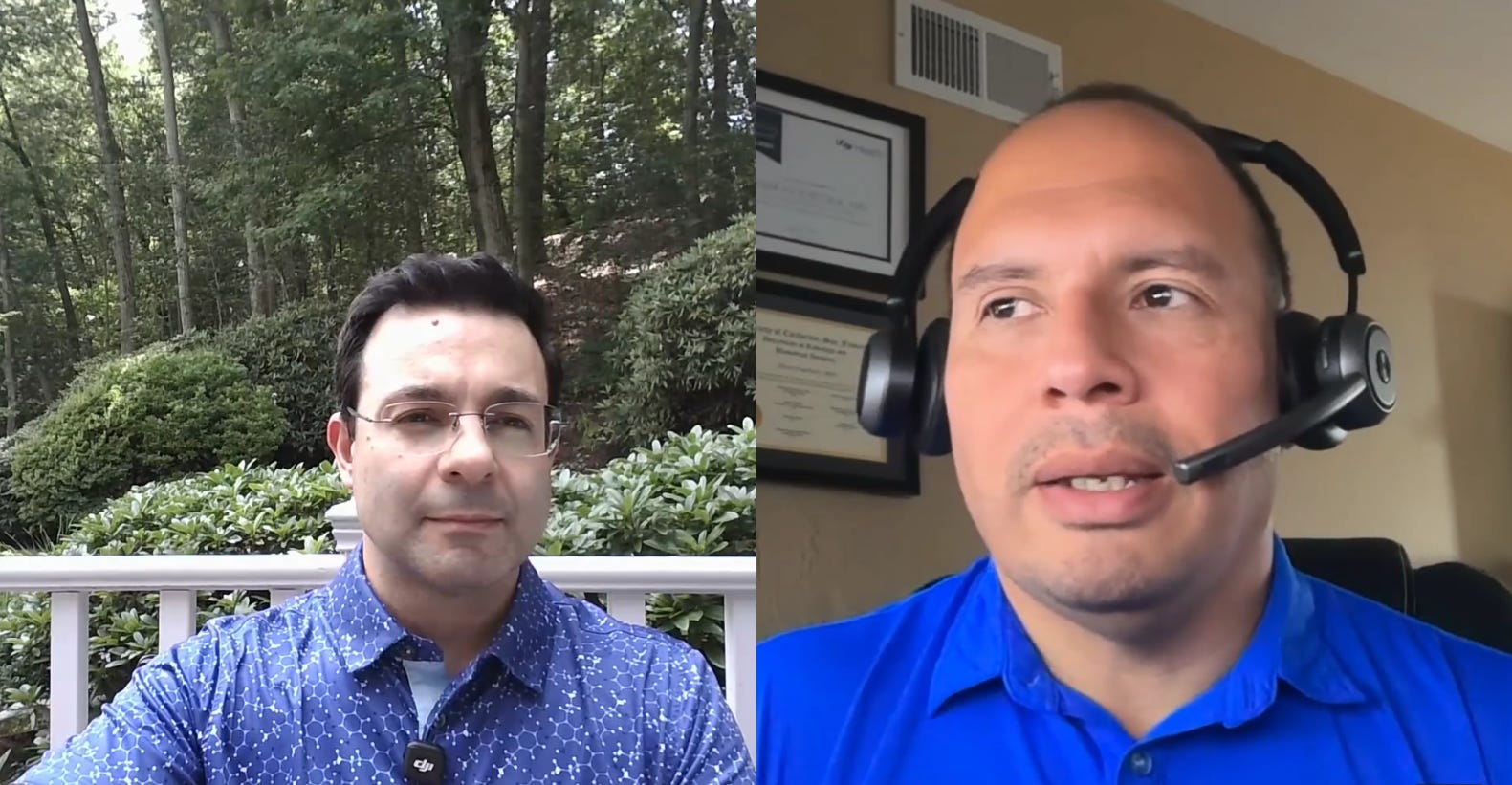
Physician Vantage Studio - Interview 02 - Dr. Jesse Courtier, Radiologist, Founder of Radiologue Ventures - Part I
Scott
Hi Jesse, it’s great to have you here today.
Jesse
Thanks so much, Scott, for the invitation. I appreciate it.
Scott
Thank you so much. I’m going to try to introduce Jesse in the best way I can, but when I tried to come up with something concise, I kept running out of categories. Jesse Courtier is a physician - a radiologist, entrepreneur, and investor. Some of the categories you might use are pediatric radiologist, professor, section chief, startup founder, FDA-clearance navigator, augmented reality pioneer, venture capitalist, Stanford adjunct faculty, and MBA student. That’s not a career, that’s a portfolio. And the interesting thing is that it doesn’t read as scattered - it reads as intentional. That’s what I’d love to explore with you today, Jesse.
So first, how would you introduce yourself at a dinner party - not a medical conference, but a dinner party where people don’t know your background?
Jesse
That’s a great question, and it evolves a bit. More recently I’ll start off by saying I wear a lot of hats - I do several different things - but I primarily think of myself as a physician, a radiologist, a pediatric radiologist. That’s where my passion is, and that’s where everything else comes from. That identity informs my decisions and is really the inspiration behind becoming managing director and founder of Radiologue Ventures, founder of a startup, and a graduate student. Those are all different things, but being a radiologist and a pediatric radiologist is my guiding principle - it’s what inspired me to take on these other challenges. So I often say, yes, I wear a lot of hats, but I’m a physician and a radiologist first.
Scott
Wonderful. So you frame it as physician first, radiologist second, and everything else layered on top. Is that right?
Jesse
Exactly. The thing I’m most focused on right now is building my fund, and what excites me about it is that it sits at the intersection of radiology and AI - that combination gives me a different track alongside my normal physician career. It’s an area where I can use my clinical experience to help inform decisions and push the edge on innovation.
“What excites me about [the fund] is that it sits at the intersection of radiology and AI - that combination gives me a different track alongside my normal physician career. It’s an area where I can use my clinical experience to help inform decisions and push the edge on innovation.”
-Dr. Jesse Courtier
Scott
Wonderful. Tell us a bit more about your background and where your journey started. What led you to medicine in the first place, and then to radiology specifically? It strikes me that radiology is an interesting choice for someone who turns out to be deeply interested in collaboration, communication, and building things with other people.
Jesse
Definitely - I’ve always been interested in the sciences, even early on. I started at USC thinking I’d do biomedical engineering. That combination of the technical piece with the human element appealed to me, but as I got into it, the engineering side didn’t quite resonate. So I did a summer doing basic research with a physician at the University of Florida, and through talking with him, I realized medicine was probably the better blend of what interested me - the human side and the technology side.
So I went pre-med, and I actually majored in anthropology. I’d done a related project in high school and found it fascinating, so I wanted to dig deeper. I still completed my pre-med requirements, but rather than the standard biology major, I wanted to study something I was genuinely interested in. It was fascinating - learning about different cultures and languages really helped me focus and do my best in my studies, and get the grades I needed for medical school.
The other piece was my work-study job in college, which was in IT - I worked tech support. I learned a ton about troubleshooting different technologies, back during the early iterations of the internet. It taught you how to approach a problem even when you didn’t know the specific software. I sometimes joke that I learned more from that job than from many of my college classes, just from the practicality of the experience.
In medical school, they introduced radiology very early in the curriculum, and the radiologists there fascinated me - it felt like they had a superpower. They could see things other people couldn’t, and they’d be right. So I got interested in radiology very early on, because it felt like the best blend of technology, humanity, and medicine. I also found that radiologists are really the doctor’s doctor - that’s where the collaboration piece comes in. Everyone else on the team may have their own piece of the puzzle, and sometimes we’re the ones who put it all together and land on the diagnosis. That really drew me to the field.
I did my fellowship training first in body imaging, then in pediatric radiology, which I was also interested in. They were opening a new children’s hospital at the time, and said if I did the training, I could stay on faculty. So I did the training, really enjoyed it, loved the pediatric element, and stayed on faculty there for about fifteen years.
Scott
And this was at UCSF, correct?
Jesse
Yep, that’s right - UCSF.
Scott
That’s wonderful. I love that narrative arc - starting in biomedical engineering, which I also did as an undergrad, and then, like you, switching to a non-technical major. For me it was about having more latitude to take other courses I was interested in while still fulfilling my pre-med requirements. And I love how you circled back to IT and picked up that technical piece as well.
It feels like that analytical, problem-solving part of your brain has been running the whole time, and it eventually led you into residency and radiology. Thank you for sharing that background, and for making the point that radiologists collaborate closely with the whole care team and often bring the diagnosis to life.
Let’s touch on the anthropology piece at USC a bit more. It’s an unusual foundation for someone who ends up this deep into technology, not just on the practice side but on the investment side, building a fund of tech-enabled companies. What did studying how cultures organize themselves give you, in terms of how you see problems, read a room, and evaluate people?
Jesse
That’s a great question. I think it shapes how I approach conversations with investors or startups from different cultures - how do they think about things, how do I approach that? Sometimes I have to take a step back and ask, am I being too direct, or too indirect? Some cultures don’t say exactly what’s on their mind, and others do. Learning to read what’s appropriate to say, and managing that as I talk to different startups and investors, has really helped me.
I find anthropology fascinating more broadly too - both historical and current cultures, how they manage family, think about relationships, think about work, and how they put it all together. I also enjoy learning languages. My wife is Thai, so I learned to speak Thai to better communicate with my in-laws. That human element fascinates me, and it’s relevant to patients too. As a physician, caring for people of all different cultures - and San Francisco in particular has a very multicultural patient population - being able to relate to them and understand contextually why a family might want to be in the room, or might not, has been really helpful for me as a physician.
Scott
Wonderful - so there’s a personal layer to it, and it informs how you navigate the dynamics of people, which is so important in practicing medicine. Fascinating.
I also read that you did a surgical internship before your radiology residency. Tell me how spending time on the surgical side changed how you see what radiologists do, and don’t do, for their surgical colleagues. I think that internship was also where Sira Medical was born, years before you knew it. Talk to me about that.
Jesse
Exactly, and I really enjoyed it. It was at the University of Hawaii, a busy year, and one that was very resident-and-intern-driven, so I wasn’t just on the floor doing dressing changes. I was in the OR doing appendectomies and inguinal hernia cases - sewing the skin was always my favorite part.
But from the standpoint of what really stuck with me: I saw the pain points in translating radiology’s 2D information into the model the surgeon actually needs in their head when they’re operating on the physical patient, with retractors in hand - a very different context than radiology. There was a real gap between the information that’s useful and actually applying it to the real patient. I did an orthopedic month in particular, working with complex fractures, which are essentially a 3D jigsaw puzzle - how do you put it back together? Spending time with a radiologist was helpful, and I eventually started learning how to build those models in my own head. Finding better ways to translate that information was one of the gaps I clearly saw as a surgical intern.
Scott
Very interesting. Tell me a bit more, briefly, about Sira Medical. What did it do, and why did it come about?
Jesse
Certainly. It grew out of time in the reading room, finding myself on the phone with a surgeon, or writing in my report, trying to paint a picture of a very complex post-surgical case or fracture, in words. Sometimes I’d end up drawing a doodle, and that would help. But I felt there was still a gap. I looked into 3D printing originally, but there were time and resource constraints at the time, and then I heard about augmented reality and thought, this might actually be an interesting way to close that gap.
I learned to code off YouTube - we didn’t have any formal training in it - bought my first HoloLens, and built our first prototype. From there we got just enough proof of concept to get funding through a catalyst program, which let us get more funding to build it out further. We brought on our catalyst-program mentor as CEO when we decided to spin the company out, and just iterated step by step, getting more funding, more evidence, and building on each piece until we got FDA 510(k) clearance.
You learn a lot along the way - what to do, what not to do - from pitching to investors, finding out what resonates with them, building the kind of evidence a hospital needs to actually purchase your product. None of that is taught in medical school. I did take the Startup 101 course that UCSF offers, which gave me a helpful foundation. That course was super helpful, because a lot of times you think about presenting your work the way you’d present a scientific paper, but investors want to see problem, solution, competition - all these pieces laid out differently. It was learning through a completely different lens. A great process.
Scott
A different lens, very interesting. I love how you started with a problem you detected in your day-to-day practice in the reading room, decided this isn’t being addressed well, and then built a prototype yourself, ran with it, and eventually raised capital and went through the FDA clearance process. What I also find impactful is that you combined two things - teaching yourself through YouTube tutorials on the HoloLens and coding, while also leaning on the established startup curriculum available to you. I love that strategy of blending those two approaches.
Jesse
Exactly - you don’t have to do all of it yourself. Get it to a certain point where other people can see the vision, and then bring on people with the extra technical or business expertise you need, and build a team. That’s another important piece.
Scott
Wonderful, both of those elements are so important. Now, fast forward a bit - eventually at UCSF you became chief of the pediatric radiology division. By any conventional measure, you’d arrived: successful, well respected in the department. The natural next step might have been department chair, or chief of a larger unit. Walk me through what was going through your mind at that point - not the polished version, but what it actually felt like to look at that path and ask yourself whether it was what you wanted to continue down.
Jesse
Exactly, that’s a great question. At the time, there’s the traditional pathway - chief, to chief of a bigger place, to chair somewhere - and I explored those options, looked into different chair positions and chief-of-larger-unit roles. I felt like, sure, that’s one path, but would I actually be happy doing it?
There was another thread I’d always had in the back of my mind. I’d always loved innovation - I’d worked with our innovation ventures program doing mentorship, and with the Plug and Play tech center mentoring startups. Originally I thought, maybe that’s ten years down the road, maybe I’ll do some angel investing, build up a track record, and maybe someday get into it more seriously. But the more I thought about it, that felt like more of a pull. It wasn’t that I was being pushed away from something I didn’t like - it was a genuine pull toward stepping away and focusing on the fund.
There was another piece too - when I was building the startup, I had one foot in two worlds, trying to do both at close to a fifty-fifty split. This time, if I was going to start a fund, I decided to step away from the other piece entirely so I could focus and get this one off the ground. I felt like I could have the most impact, and the best chance of growing this idea, if I stepped fully away and focused on it.
There were definitely people who, without saying it directly, implied I was throwing away my career - ‘are you having a midlife crisis?’ I wasn’t out buying a motorcycle, but for me it was more this genuine draw toward doing it. I got into VC Lab, an accelerator for venture capital funds, which was an amazing program. It meant I didn’t have to spend ten years working through each step of building a fund the traditional way - I already had the expertise, the network, and a thesis. And really, the key piece is that if you can believe in yourself, other people can believe in it too. You have to believe you can do it first, and once you do, people say, yeah, I want to get on board, I want to grow this with you.
That was what let me feel like I was on the right track. I didn’t feel any regret about stepping away - I enjoyed that chapter, but I felt like it was a chapter, and this was the next one. At least, that’s how it felt for me.
“It meant I didn’t have to spend ten years working through each step of building a fund the traditional way - I already had the expertise, the network, and a thesis … the key piece is that if you can believe in yourself, other people can believe in it too. You have to believe you can do it first, and once you do, people say, yeah, I want to get on board, I want to grow this with you.”
-Dr. Jesse Courtier
Scott
Wow, that’s so impactful - there’s a lot to unpack there. What I really admire is that, despite being very successful with a great leadership role at a wonderful institution, you said, I feel something pulling me. That’s a very different sensation than someone who’s not thrilled with what they’re doing and doesn’t know what’s next, just dabbling out of fatigue or burnout. What you’re describing is more like an intellectual itch you’d been trying to scratch for a while, and deciding to go down that path.
I also love how you leaned on an existing accelerator program rather than reinventing the wheel - finding people with real expertise in what you wanted to do and getting up to speed through them. But I think the most important thing you said was about believing in yourself - you have to bet on yourself and believe you can do it before anyone else comes on board. Would you agree that’s the biggest piece of all of it?
Jesse
Definitely. You have to believe in yourself, tell yourself, I’ve got the tools, I can do this. Once you have that belief, and once you show it, you can take something that’s just an idea in your head and start turning it into reality. I think that’s really fun.
Scott
That’s wonderful. Just realizing it’s something you can do - that you have the choice. You don’t have to stay on the predefined ladder, climbing to the next rung the way most people do. You have the choice to step off, or pause, and explore something else. That’s all agency you have.
“You don’t have to stay on the predefined ladder, climbing to the next rung the way most people do. You have the choice to step off, or pause, and explore something else. That’s all agency you have.”
-Dr. Scott F. Cameron
Jesse
I’d also say that opportunities come once you’ve made that leap, ones you wouldn’t expect. For instance, I get more national speaking invitations doing this now than I did when I was chief at UCSF last year. People said I was throwing away opportunities, but I actually get more talks now - at RSNA, SPR, places like that - than I would have otherwise. I think when you’re genuinely pursuing your passion, other people notice and want to learn more. These opportunities find you once you start heading down something you’re passionate about.
Scott
Wonderful. Following this thread - at some point, as an evolution of the thinking you just described, you decided it was time to step away from your leadership position at UCSF and transition to Bay Imaging Consultants, where you still practice radiology, and around the same time Radiologue Ventures was born and taking shape. Walk me through the how and why of that specific transition - changing practices and launching Radiologue. What did you have to give up, what did you gain, and how did you know the timing was right?
Jesse
For me it felt like there’s a point in a career where you feel like you’re near the ceiling of what your current role allows. One of the things I found when I was Googling ‘when is it time to switch jobs or find a new career’ was an answer that said: it’s when you start Googling that question. I thought, okay, that’s actually a good indicator.
“One of the things I found when I was Googling ‘when is it time to switch jobs or find a new career’ was an answer that said: it’s when you start Googling that question.”
- Dr. Jesse Courtier
Scott
I love that - it’s exactly what you were doing.
Jesse
Exactly. One of the nice things about UCSF is a broad network of former trainees and residents, and one of the leaders at Bay Imaging Consultants has daughters who go to the same school as mine. We got talking, and it turned out they were looking to fill evening shifts - the kind of shifts people don’t necessarily want, so they compensate a bit better for them. That worked well for me, because it let me balance my time so I could focus on clinical work in the evening, without long call shifts or carrying a pager the way I did before, and step back from the administrative roles to really focus on this critical piece, freeing up my daytime for innovation work.
It’s worked out well - a great group. It also gave me a new perspective on private practice. Coming from an academic world, everyone’s on one system, using the same templates. In a private group, you’re covering multiple different hospitals and systems, and figuring out how to navigate that. They do a great job of it, and it gave me a new appreciation for how the private world operates. So overall it’s benefited me, I think.
Scott
Very interesting. I like how you found a way to structure things so you could do everything you wanted. A lot of physicians struggle with the question of when the timing is right - there’s always a reason to wait, a committee obligation, a training cohort, a department that needs you. It sounds like the timing became right because you felt the pull, and you found a way to mechanically construct your schedule so clinical work and the investment side didn’t compete for the same hours.
“A lot of physicians struggle with the question of when the timing is right - there’s always a reason to wait, a committee obligation, a training cohort, a department that needs you … the timing became right because you felt the pull, and you found a way to mechanically construct your schedule so clinical work and the investment side didn’t compete for the same hours.”
-Dr. Scott F. Cameron
Jesse
That’s exactly right. There’s an old quote - people wait for the perfect time to start, but the starting is the perfect time. That’s really the thing. You just get it done.
Scott
Wonderful. Let’s jump into Radiologue Ventures. Tell us what Radiologue Ventures is, why you started it specifically rather than joining an existing fund, and where it stands today. Give us a real picture of what you’re building.
Jesse
Definitely. We’re focused on investing at the intersection of radiology and AI - pre-seed-stage companies tackling workflow bottlenecks in radiology, across the whole imaging lifecycle, from scheduling, authorization, and planning on the front end, through interpretation, protocoling, and performance, to communication on the back end. Those are the areas where we see the real challenges in radiology imaging, alongside the constant challenge of physician burnout. Our goal is to use technology to genuinely improve imaging workflow.
For me, this felt like a challenge I’m uniquely positioned to help solve. As radiologists, we’re so often passive consumers of technology - we don’t have much input at the very start of the process, and we end up with software that either doesn’t solve a real problem and adds time to the workflow, or just doesn’t do what it’s supposed to. I made it a goal to identify companies actually solving real problems, and to use my own experience taking something from zero to FDA 510(k) clearance and funding to help founders who have a spark - a little ember - and help guide them into a bigger flame. That’s what I decided was the best fit for me, after talking to a lot of people and refining the thesis and the stage I should focus on. That’s why I felt I could make a real impact here, rather than starting as an analyst and working my way up through a fund the traditional way. We’ve now built up the fund, completed our first close, and just finished our fourth investment. It’s been really exciting - I’ve gotten to meet a lot of different startups, see the cutting edge of the technology, and find founders doing genuinely impactful work that I can help support. It’s been a lot of fun.
Scott
That’s great, congratulations on all the progress with the fund. It sounds like an amazing niche, and as you pointed out, it’s very well suited to your background, skills, and interests - almost as if it was built for you, given where you’ve been and where you want to go. That’s a great match between founder and company.
Related question: do you think physicians should operate in their zone of genius, their zone of passion, or somewhere at the intersection of the two? How did you navigate that for yourself?
Jesse
That’s a great question. I think it ends up being a mix of both - where you have talent and experience you can leverage in service of areas that genuinely interest you. It can get challenging if the two things are too disparate - if I decided tomorrow I was going to become a four-star Michelin chef, I have zero experience in that. But if you have real expertise, the question becomes, how can I leverage it in a way I might not have initially imagined - whether that’s investing, entrepreneurship, or advising and mentoring startups.
I think we have a lot of practical experience and translatable skills. Someone else asked me about this too - the diligence, the focus, the technical dedication that got us through medical school, and then, as a radiologist, how to navigate working, collaborating, and building things with others. Those skills translate to a lot of other endeavors. I think physicians sometimes underestimate ourselves, thinking, this is just my niche, but there are a lot of skills we have that apply well beyond it.
“We have a lot of practical experience and translatable skills … the diligence, the focus, the technical dedication … and then, as a radiologist, how to navigate working, collaborating, and building things with others …. physicians sometimes underestimate ourselves, thinking, this is just my niche, but there are a lot of skills we have that apply well beyond it.”
-Dr. Jesse Courtier
Coming up next week in Part II… we'll learn from Jesse about the weekly automation that found one of his portfolio companies before it had even spun out, the hundred interviews he thinks every physician should do before building anything, why some AI tools stop working six months after they're deployed, and Jesse's warning about what AI could cost the next generation of physicians - and a hint - it isn't their jobs.
Scott F. Cameron, MD is a practicing radiologist, AI implementation leader, angel investor, and MRS Past President. He writes about physician career architecture at Physician Vantage Studio.
Jessie, when you said "For me it felt like there’s a point in a career where you feel like you’re near the ceiling of what your current role allows." it connected with me. You are looking for more because you have maxed out what you have, not because you are failing. A choice from a position of power like that makes the whole difference.
Thank you Scott for the opportunity to share a bit about my journey from academia to building a venture capital fund. Appreciate the insightful questions and viewpoints!