

In Part I, Dr. Holly Lofton described how she built obesity medicine programs and a research presence inside an academic medical center. Part II covers what grew around that foundation: advisory roles with digital health companies, how to weigh an established industry player against a startup, media appearances ranging from the Today Show to CNN and Vogue, and the structure of a week that holds clinic, research, consulting, and speaking together. We also discuss how she manages conflicts of interest and NDAs, how her team grew to make this possible, and her advice for a physician who feels they have hit a ceiling five years into practice. A recurring thread is keeping a secure base while experimenting outward, which makes this a useful conversation for any physician designing a career with more than one dimension.
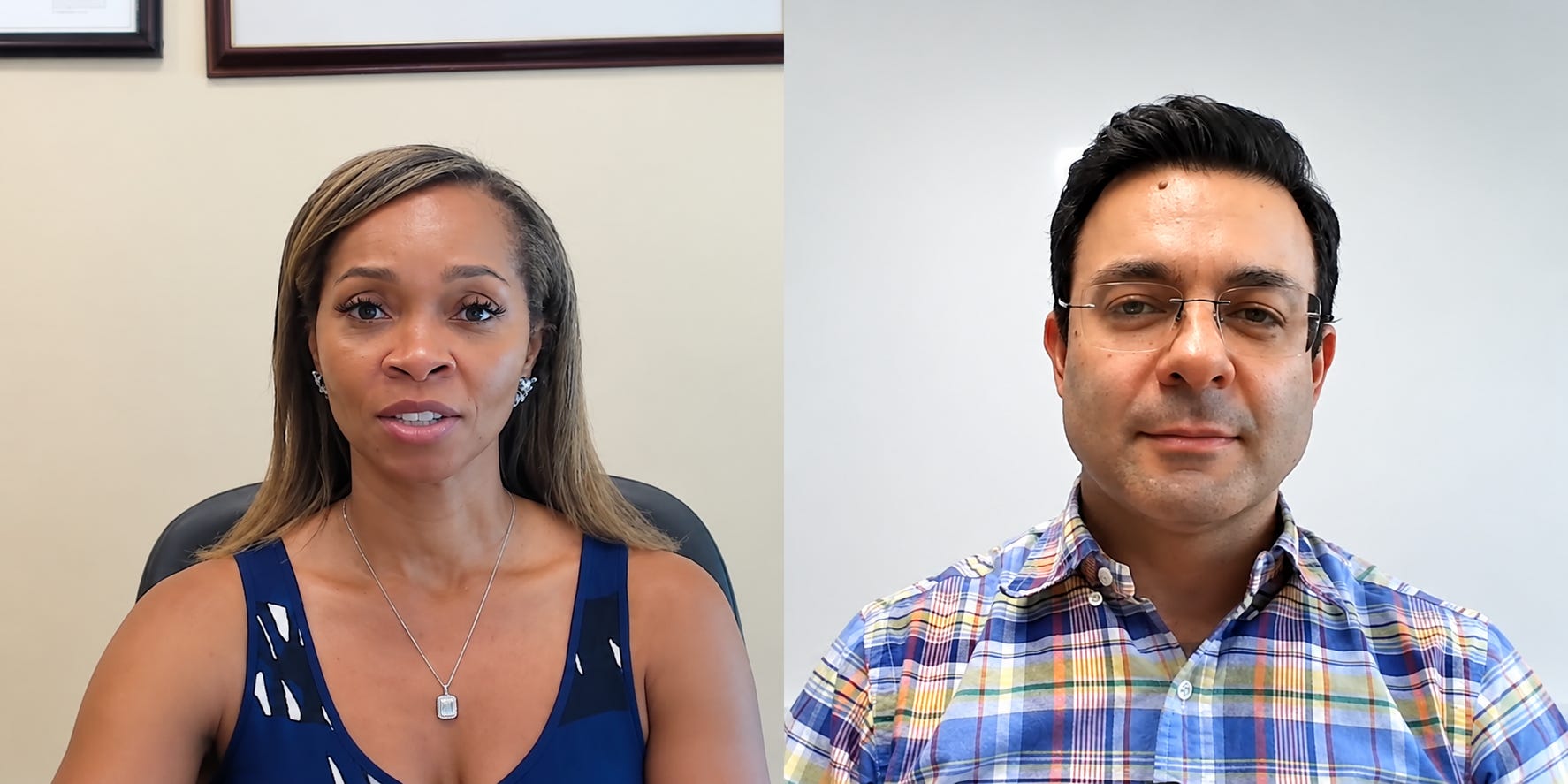
Physician Vantage Studio - Interview 06 - Dr. Holly Lofton, Obesity Medicine Specialist and co-founder of New York University's Comprehensive Program on Obesity - Part II
Scott F. Cameron, MD: So I want to ask you a little bit about your advisory work. I know you’ve been an advisor and you’ve been involved in digital health with some companies like WellDoc and Fridays Telehealth. Tell me about the advisory work, in terms of how those roles found you or how you found the roles, and how you got started with that.
Holly Lofton, MD: You know, Scott, I actually wondered that myself, so I asked them - because I get blind emails, I get blind LinkedIn messages, and many of them said they found me with AI things like ChatGPT - that’s where they came up. Some because they went to a presentation I spoke at and have interest and think I’d be beneficial for the company. Some is just word-to-word, a recommendation from another doctor I worked with, maybe my fellowship director - someone says, “Hey, I need someone in New York,” so this is the person we’re going to. But more than SEO - I don’t have a website or anything - it’s coming from AI, and doing presentations is where they’re finding me.
Scott F. Cameron, MD: Yeah, interesting. Okay, so you’re saying a lot of it is inbound - people reaching out to you and saying, “Hey, I’ve heard about you through this particular search result or this particular talk that you did, and I noticed that you’re an expert in ABC - would you be interested in this type of engagement, advisory or consulting?”
Holly Lofton, MD: That is actually typically where it comes from, when it’s outside of the pharmaceutical space.
Scott F. Cameron, MD: Yeah, okay. And then do you have any advice to physicians that haven’t done any advisory or consulting before? Let’s say that they’re doing more of a typical academic-type practice - they have some teaching, some research, and of course they do the clinical work. How would you advise them to go about looking for advisory or consulting roles? Any perspectives there?
Holly Lofton, MD: So then you do the opposite - you go to where the people are trying to network. So that’s going to - I think the pharmaceutical dinners, and talking to the person who’s running it there, going to things like Digital Health New York conferences - they have networking sessions that are a part of that - and then speaking to the person who gave a presentation that you like, or a panel that you like, or even the head of that company. Because many things are sought out that way - I remember when I was in college, way back, I went to a surgeon at Harvard and said, “I’m really interested in just shadowing for surgery, ‘cause I thought I might want to be a surgeon,” and he said, “Sure, come on.” It was that easy. And I realized I didn’t actually want to be a surgeon, but I saw - just reaching out and seeing who’s willing to even just have you in the clinic for a day, sit down and have a conversation about practices and maybe where they might be more able to help. I think the networking aspect of attending conferences, and even again looking up social media, seeing if there’s a company you would like to be involved and interested in, that’s doing some of the work that you prefer to do - or even giving them a recommendation: “Hey, I know you’re doing a platform that’s telehealth for cardiology” - I’m using that as an example - “you know, I have experience in this, is there anything I could be a part of?” That’s a lot of how things happen organically now - it’s just through either boots on the ground or social media networking.
Scott F. Cameron, MD: Yeah, that’s great, fantastic. I appreciate that advice and perspective, and how the tactics might change depending on who you are and where you are on your journey. I have a question for you about consulting and advising related to established industry players versus startups. Let’s say somebody’s thinking about whether to pursue an opportunity with an established industry player - maybe it’s a well-known pharmaceutical company or medical device company - versus a startup that’s just kind of getting out there and has less of a track record. How do you perceive it in terms of the value to a physician’s career, or what it can do for them, if they choose to put their energy into getting an opportunity with an industry player versus a startup?
Holly Lofton, MD: Well, I think one thing to note about a large pharmaceutical company is they have multiple opportunities for you, whether it’s research, advising on an advisory board - for example, doing that one time a year when a new product comes out - or even just developing relationships with an executive in that company, so that they might just have a meeting with you and give you an idea when something comes up. So they have multiple opportunities, and generally the pharmaceutical company is going to pay for those things that they ask you for, in a way that can be very straightforward - you have a contract, you get this much per hour, and you do this for us.
When you’re working with a startup, I think it is important to vet the startup in any way you can - their website, their LinkedIn, look at the CEO and the president and just see what’s going on, because it’s easy to hide things, and you want to make sure you’re not involved with something that you don’t want to be associated with. I highly recommend caution with a company that is not well known, because they see your name on anything you’re a part of, and you don’t want to have to backtrack that later. And then ask what’s the commitment - do you have the time? Is it one hour a month, is it four hours a month that they need from you - and make sure that you’re able to meet the expectations and be realistic about that. And then ask for an opportunity if you’re interested - say, being a chief medical officer of a startup company, you may start as an advisor and ask if there’s an opportunity to be an executive. That’s something that you’re interested in, because there are many chief medical officer positions I see out there now, and I see many people transitioning from academia to that type of environment for various reasons. So see what the opportunities are, make sure you have the time to commit, and just make sure that the company is more established.
Scott F. Cameron, MD: Yeah, that’s great. So now if somebody was your mentee and they came to you and said, “Dr. Lofton, I’d love to start with a new opportunity, and I have a choice between this particular established industry player and this particular startup” - is there either of those two directions you would steer them towards more than the other, or do you think it’s kind of equal in terms of how you would guide a mentee?
Holly Lofton, MD: Yeah, I would ask them what their ultimate goals are. That’s something my mentors always asked - “Well, you have to think, what do you want to do?” And I would always say, “Well, I’m asking you because I don’t know what I want to do.” But you do have to know what the ultimate long-term goal is, because if you want more academia, more papers, more research, then it’s probably better to go with a larger institution. If you want to be that chief medical officer or executive at something that may be smaller, then a startup may be a good position - not necessarily you’ll start in that one, but to get your feet wet with that one and then move around. And again, do you agree with the principles of the company? If it’s a drug company - do you prescribe this drug, do you like this drug, would you give it to your family? If it’s a telehealth platform - do you agree with the way they practice, would you support it, would you recommend it to a family member? I always look at everything, from medicine, prescribing, meds, diets, to “would I recommend this for a family member?” And I think that keeps it organic and helps maintain relationships better.
Scott F. Cameron, MD: Yeah, that all makes sense. And then one last question on this particular topic - if you wanted to look at things from the lens of which one of these two paths, industry player versus startup, has the better chance of developing into more long-term, part-time work that’s more durable and sustainable or recurring - is there either of those two forks that you’d say has the better chance or opportunity, or do you think it all depends?
Holly Lofton, MD: Well, we never know what will happen - COVID taught us that very quickly. So the first thing I would say is don’t leave your day job until you have something very secure in other positions, because if you have an academic position, that helps you get other opportunities - they say, “Well, who’s at this academic institution?” And if you find something that you think is more suitable for your lifestyle, because your children are older or younger, or you want to move, then that’s something you could look at. Startups - we don’t know what’s going to happen with them. They could be very successful, and the shares that you get could be worth a lot, or nothing. So I think it’s very fair to have your feet in both buckets until you decide which pathway you want to turn to ultimately. Because a drug company’s stock can go up or down - we’ve seen this in the last couple of years - and a startup could do the same and go public, and that really affects you. So I wouldn’t negate either one - I think it’s fair to offer some things to both.
Scott F. Cameron, MD: Yeah, wonderful, great. I love that perspective. So now I want to ask you about something very fascinating to me, which is your media appearances. I’ve seen a few of these as I’ve followed you on social media - the clips of interviews you’ve done for outlets such as the Today Show, local news networks, CNN, Fox, The Times, Vogue, and some other work in the digital and podcast domains. So it’s a very impressive portfolio of media appearances, and I’m curious how that started. Was there any particular moment where that ball started rolling, or how did those early media appearances take shape?
Holly Lofton, MD: Thank you for your kind words throughout this interview, by the way, Scott. So I will say that the media started from very early on - I had a short radio segment when I was at Geisinger, after my fellowship, while I was faculty there, just talking about the diet of the week. And with that, I think you gain experience. I also wrote an article for the Obesity Action Coalition maybe three times a year, just to keep my skills - I think I have the skills of writing and speaking - and that developed into other opportunities, and usually those are again requested of me, to come speak about these topics. So things like live TV - you have to know your topic very well, you have to think about the angles, because you’re there to give the truth, and they’re there to give the news in a way that may be sensational. So it’s not reading off the teleprompter, it’s not looking at the notes before you come in - those are really the situations in which your knowledge shines through. And of course, it’s also a way to self-promote, knowing that the audience can see your confidence, or lack of such, and want to come to you as a provider, want your help with any other endeavors they might have opportunities for. But regarding my media, most of it comes direct to me, or we also have a PR person at NYU that they request media through, and they again vet the validity of what they want to talk about. So you have to feel comfortable with the topic - both the knowledge, and that it’s something you want to publicly speak about - before you put it out on the internet, because it’ll never go away.
Scott F. Cameron, MD: That’s right, yeah. And through doing all these media appearances, what doors has that opened up for you, or how has that changed your career?
Holly Lofton, MD: Well, I got to meet some nice public figures, I will say that for sure. And I think it just is that opportunity - I always wanted to scream my message from the mountaintop. So whether I’m doing a talk show and discussing protein, or whether I’m talking about the newest weight loss drug, I’m giving the honest truth about the topic. I think that’s really brought people to the table to see me as a provider. It just helps me feel more fulfilled, and I think that does lead to some other opportunities, whether they be in something like digital health or a speaking engagement for a community group. So it really all comes full circle, about how you present yourself, to make people trust you.
Scott F. Cameron, MD: Yeah, okay, wonderful. And now tell me about how this all fits together within the structure of a typical week. You’ve got all these different things that you’re doing - tell me about how you would break down a typical day and a typical week, in terms of the flow, what happens.
Holly Lofton, MD: The typical day starts with looking at the calendar and seeing what’s on it - what am I doing today, and just preparing yourself mentally for: is this a pretty straightforward clinic day, or do I have a speaking engagement at night, and in between have to prepare your meals around that, and everything else you have in your personal life - this is going to be a longer day. Typically I have clinic for about eight hours a day, Monday through Thursday, and then I save my meeting times towards the end of the week, and there are some things that happen on the weekend. So it’s about, where can we squeeze this in - actually, right before we started here today I got a message: “Where can we find time to discuss this topic that one of my dietitians needs to discuss?” I think it’s important to leave some open time in the schedule for things that pop up, whether it’s a media interview, if I have to move things around, whether it’s someone has a personal issue - a staff member that you need to discuss something with - you want to be available for them too, because they’re working to help you be better. And so I actually have an assistant whose sole job is to help organize my schedule, and I think that’s really important, because things get double-booked, overlooked, you’re on the wrong flight, and those kinds of things really mess up everything. So having someone to help manage your schedule - lots of people use AI for that too.
Scott F. Cameron, MD: Yeah, okay. And so if I understood you correctly, is it accurate to say that the basic structure of each day, in terms of the clinic time and that sort of thing, is about the same, but it’s going to vary a little bit depending on what meetings or interviews or things like that you have? Is that correct?
Holly Lofton, MD: Exactly. And then the research is sort of - we do that when there’s time, that’s before clinic, lunchtime, after clinic, and sometimes that involves, you know, we’re still texting and emailing when I’m home later. Media interviews tend to pop up within a day or two - they say, “You’re going to be on the show today,” so that could just throw everything off. I think you have to be prepared for that kind of thing to happen - I have my brush and everything right here just in case I’ve got to do that. And then, when you expect a really heavy day, sometimes you have to say no to other things, and I think that’s appropriate: “I don’t have the time, the energy, the bandwidth to do that today, maybe next time.” It’s something that’s perfectly fine to say. And as far as when I do the consulting, I try to do that on my admin days, but there’s still a lot of clinic work to catch up on - notes and things like that - to make sure that you don’t get behind on that aspect too.
Scott F. Cameron, MD: Okay. And then has the structure of the week or the day changed at all as your career has progressed? Not only as you’ve become more established and successful, but also as personal and family needs might have changed, right? Like you might have other people in your life that demand your time and attention. Has your career structure shifted at all, in that respect, as it’s gone on?
Holly Lofton, MD: Absolutely, Scott. So when I started as faculty right after my fellowship, it was five days a week, eight hours a day, all in person, and that’s what you do - rest as much as you can on the weekend. I didn’t have a lot of media or other things to do, wasn’t doing as much research at that time. When I started the fellowship, I did have dedicated time to do the administrative work for the fellowship, because teaching the fellow is happening while you’re working - it’s not like you teach them for more than one hour didactic outside of teaching. So you just develop a different structure - while I’m teaching a fellow or student while I’m working, seeing patients, then I need a separate time to write my notes. So having some kind of administrative time, I think, is important when you’re training someone else.
A big change has happened as my team has grown. It started with myself, and I added the dietitians first to help me with the New U program and seeing patients for the lifestyle management. But now I have six nurse practitioners and PAs to help me see the patients, to help with the messages, to help read the labs and things like that, so that I can focus on the administrative aspects of being a director but also doing research and all the other things that come to the table. So I think growing a team you feel confident in, that you trained, is essential as you develop more roles.
Scott F. Cameron, MD: Yeah, wonderful. Yeah, and that helps to keep everything under control, decompress some of the administrative and logistical things, and help everything work more smoothly together. So something that I thought about during our discussion here - you’ve done so many interesting and innovative things at your institution, and then also outside the institution or tangential to it, including your consulting practice. Have you ever noticed any tension between the internal stuff that you’re building and the external stuff, in terms of one of them preventing the other from growing, or has there been any kind of tension there, or have those been kind of harmonious together?
Holly Lofton, MD: I mean, I think working with an academic institution, if you’re doing something outside, you sort of have to get permission, because it’s going to come to light if you’re doing something that is in conflict with the academic institution - there’s no hiding it. We have the Sunshine Act, and if you’re helping a competitor, that doesn’t work really with academic institutions. So that’s again where I think you have to vet the things that you do, and think, “How will this affect my position?” and whether you should get out of this and do something else. I haven’t really found that a lot of the consulting groups are similar in what they do, and they all tend to come with an NDA - so I can work with three telehealth platforms and I’m not telling platform two and three what platform one is doing. Keeping that in mind is really important. They all value your input and your knowledge, but it’s not about sharing. And then there are some research opportunities from outside that can benefit some of the patients that you have in private practice at the institution, and I think it’s just fair to ask for permission - “Can I reach out to our patients about this research opportunity that may be beneficial for them?” - because ultimately, if that’s your main position, they have the right to say yes or no, “We think this is in conflict.” Making sure that those conflicts are not something that’s going to be detrimental to either party is really important when entering into these relationships with companies.
Scott F. Cameron, MD: Yeah, interesting. I love the way that you’ve made it all kind of work together, and as you said, maintaining that compliance with your internal department and also respecting the NDAs of different companies. I think it takes some skill to balance all those things well, but you seem to be doing that, so that’s fantastic. So as we wrap up here - if there’s a physician who, let’s say, is five years into practice, and they come to you and say, “Dr. Lofton, I feel like I’ve kind of hit the ceiling in terms of what I can achieve or do, and practice has become a little bit routine, a little bit monotonous. I still value the clinical work and the research and the teaching, but I feel like I’ve hit that ceiling” - what would you say to that person, or how would you guide them?
Holly Lofton, MD: I would say - is this because of something personal in your life that’s changed? Maybe you had kids, or maybe your interests moved somewhere else - that’s the first question. Are you just not liking where you are? Do you want to stay where you are? Second - what of your composition do you like, and be honest about what you don’t like, and really write that down, because we’re going to try to replace that with something that’s more favorable. Maybe it’s traveling to speak, or maybe it’s educating others - but something has to go to the wayside if you have a full clinical practice and want to take up more opportunities without becoming burnt out. If it’s that you want more time for research, you then have to do more internal research and prove that you can get the publications there, so your own administration will give you research time - these things aren’t just granted, you really have to earn them in the academic situation, and they’ll ask, “Well, why should I give you this time or extra personnel when you’re doing so great as a clinician?” And that’s the time to say, “Well, I can do more if you give me more resources,” or, “I’m willing to take a cut from the institution so I can do other things that I enjoy more, that also may potentially be lucrative, but still in medicine, not clinically.” So those are the decisions that have to be made over time. It shouldn’t be an overwhelming jump to the next opportunity, but really some thought about sort of wetting your feet a little bit, until you find what your limit is, but also what your forte is, and those things that bring you fulfillment.
Scott F. Cameron, MD: Yeah, wonderful. I love those tips on how to think about not just what you’re going for, but then how you’re going to do these experiments along the way to get there, and what sort of shifts you might want to take. So thank you for those comments. And so my last question for you is - if you can share with me what’s your vision for your next chapter. If somebody wanted to look into that crystal ball and say, if Dr. Lofton had her wildest dreams come true, or her wish, in five years, ten years - what would that look like professionally for you? Any ideas as of right now?
Holly Lofton, MD: Well, I think with all of our virtual communication, these things can happen. I’ve always wanted to, one, teach providers weight management on a grand scale, but with the opportunity for it to be two-sided, where they can ask questions - because I realized, in the first of my weight management consulting business, I spent three months teaching one provider weight management, and that’s not scalable. So if we could interact more like a classroom, where one doesn’t have to be there in person - I think that would be something I’d want to do, the classroom could get as big as it wants to be, and no one has to leave their house or their office. So that’s something I definitely want to do. And I want to just do more community education with adolescents about - we won’t call it weight management - about nutrition and lifestyle, as they leave their home and go to either the workforce or college, because I think there’s a real paucity of knowledge that exists, and that’s what’s leading to our obesity epidemic in children, adolescents, and adults. And then I want to do more research on novel treatments for obesity management, that is beneficial both nationally and internationally.
Scott F. Cameron, MD: Yeah, wonderful. Well, I wish you success in all of those endeavors, and I definitely think that’s possible to do in this day and age, with your experience and background. So wishing you the best with that. Thank you so much, Holly, for the conversation today. I’ve learned a lot, and really appreciate your insights into your career trajectory and the advice you have for others that are potentially following in your footsteps, or want to do something that’s more expansive outside of their typical practice. So thank you so much for the time.
Holly Lofton, MD: Sure, Scott. Thank you.
Scott F. Cameron, MD is a practicing radiologist, AI implementation leader, angel investor, and MRS Past President. He writes about physician career design at Physician Vantage Studio.