


In this thoughtful conversation with Dr. Hiba Hamdar on The Next Stethoscope, we discussed where AI already outperforms doctors, where it still falls short, and what medicine risks losing if it leans on AI too soon.
As a radiologist, I spend the majority of my time in clinical practice. Much of my work sits at the intersection of daily clinical practice and the AI tools increasingly built into it. Alongside my clinical work, I serve as a consultant and reader on clinical trials evaluating AI software for radiology applications, as well as trials for oncology drugs in development. I’m also the founder of Physician Vantage Studio, a venture focused on helping physicians navigate career architecture - helping them create leveraged, flexible, and fulfilling careers without leaving medicine.
What follows is a wide-ranging conversation about where AI already quietly runs in the background of medicine, where it still needs a human to catch what it misses, and what’s at stake - for patients, for students, and for the profession - as that balance keeps shifting.
- Scott F. Cameron, MD and Hiba Hamdar, MD
The Conversation
Hiba: To start, can you tell us a bit about your background and the work you do day-to-day?
Scott: Sure, so I’m a practicing radiologist at Atrius Health, and I work in the Greater Boston area, and I practice clinically the majority of the time. I also spend some time working as a consultant and participant on clinical trials, where I’ve had experience reading for AI trials, for AI software and development, particularly for radiology applications. I also read for clinical trials for oncology drugs that are in development. And then I also have an entrepreneurial venture where I’m working on Physician Vantage Studio, which is a business around helping physicians with career architecture. So that’s what I do in a nutshell.
AI has actually been used in medicine for decades - even thirty or forty years ago - though it wasn’t always recognized as AI. How was it being used back then, and how did doctors even know they were using it?
Yeah, so it’s interesting. As you said, AI has been around for a long time. So in radiology specifically, we’ve had computer-aided detection, or CAD, for mammography for a long time - for over a decade, much longer than that. And it was really embedded as part of the workflow where, for example, you’re reading mammograms, and then at the end of your review of the case, you would press a button and then it would flash sort of an indicator on the screen telling you what the AI detected or didn’t detect. So it was a little bit subtle, a little bit in the background - you had to trigger it to make it appear. And I think now it’s interesting because we have very many more AI solutions, and some of those are truly hidden into the background and you don’t see them. Some of those may be workflow solutions. So, for example, let’s say a triage AI algorithm, which basically looks through the cases that you have to read on your list, and it will automatically detect which one of those cases should be brought to your attention earlier for review, and it will shuffle those up in the list so that you can see them. So an example would be if you had a list of CT scans, and one of these CT scans had an intracranial bleed, you’d want to know about that sooner than later. And so the software in the background could pick that up and then bump it up on your list. And then you know, okay, this is the next one I need to read, without you having to interact and do anything. So those are some solutions that are really kind of quietly running in the background. And then you have some more solutions that are more visible and require more interacting with. A lot of those tend to be the diagnostic tools as opposed to the workflow adjunct tools. And so those may be, for example, an AI software that is helping to characterize a particular tissue or tumor type. And you’re going to click on that part of the image and it’s going to analyze it, give you some output, and then you have to look at that and then review it in the context of the patient’s medical record to decide how useful it’s going to be in your decision making. So it really spans the whole range, from being completely invisible and in the background to being something that you’re really interacting with quite a bit.
Could AI ever replace a human doctor?
Yeah, that’s a very popular question. I think the real answer to that is we don’t know. I think that a lot of people see the power for AI solutions and software. I don’t envision AI replacing the human anytime soon. I think it’s going to really be an adjunct to healthcare delivery, and we’re going to work collaboratively with AI. I see AI as having a lot of power in streamlining a lot of the processes that we do, eliminating a lot of the mundane routine tasks that we do - let’s say documentation, or measurement of certain lesions on imaging studies, things like that. And I also see it potentially taking care of a number of examinations or encounters that are either normal or close to normal. And so, in that way, handle some sort of simpler cases. But I think those more complex cases, or the cases that require more context and judgment, still will need the human element. But I think ultimately we have to maintain a sense of humility and say that we don’t really know fully what’s around the corner five years, ten years, fifteen years from now.
A recent Forbes article suggested AI will likely beat doctors at key medical tasks. Based on your experience, what does AI have that human doctors don’t - and what do doctors have that AI doesn’t?
Sure. I haven’t read that article that you’re referring to, but I think what they’re kind of getting at is: if you look at a particular task or a narrow domain, can AI outperform a human? And I think we have data that the evidence is yes, for certain instances of those types of things. So if you take a particular narrow use case, I think AI can have a lot of power there, potentially be better than a human, depending upon the scope of what it’s trying to do. I think what AI has, really, that humans do not have, is that the AI has access to a lot more resources. It has access to an almost infinite amount of data and computing power, whereas the human mind, as smart as it is and as complex as it is, has a limited ability to process things, from an information processing standpoint. AI just doesn’t have those limitations. So it can draw on a much larger pool of knowledge, it can run essentially all of the time, and it doesn’t fatigue. It doesn’t ask for breaks, it doesn’t get emotionally attached to the task that it’s doing. And so, from those respects, I think AI has an advantage. I think where AI falls short is that it doesn’t have the full clinical context that humans have when they are taking a patient under their care. So AI has a lot of advantage when it comes to content, but not necessarily context. And so the human really has that advantage there, because you’ve had the years of experience seeing the subtleties and the nuances in how patients present in different ways, how they present in imperfect conditions, and what to do when you see those sort of complex scenarios. AI may not always have that sort of ability to handle those contexts, but it may perform very well under certain predefined scenarios A, B, C. So I think that’s where humans have the advantage. And then also, humans have empathy and have connection, and I think that’s hard for AI right now to replicate. And I think that can drive certain behaviors and compliance from the patient side, because if you think of a patient as consuming healthcare services, you ultimately want the patient to do something with that. And so if you want the patient to get a follow-up scan, or take a medication, or start a lifestyle intervention, there has to be that trust and that compliance that’s going to come after you give them that information. And I think humans do a pretty good job of helping the patient understand what they need to do and encouraging them to do that. Whereas I’m not quite sure AI is going to have that same longitudinal impact and relationship and follow-up. But I think time will tell. These tools are getting better and better all the time, and so it remains to be seen.
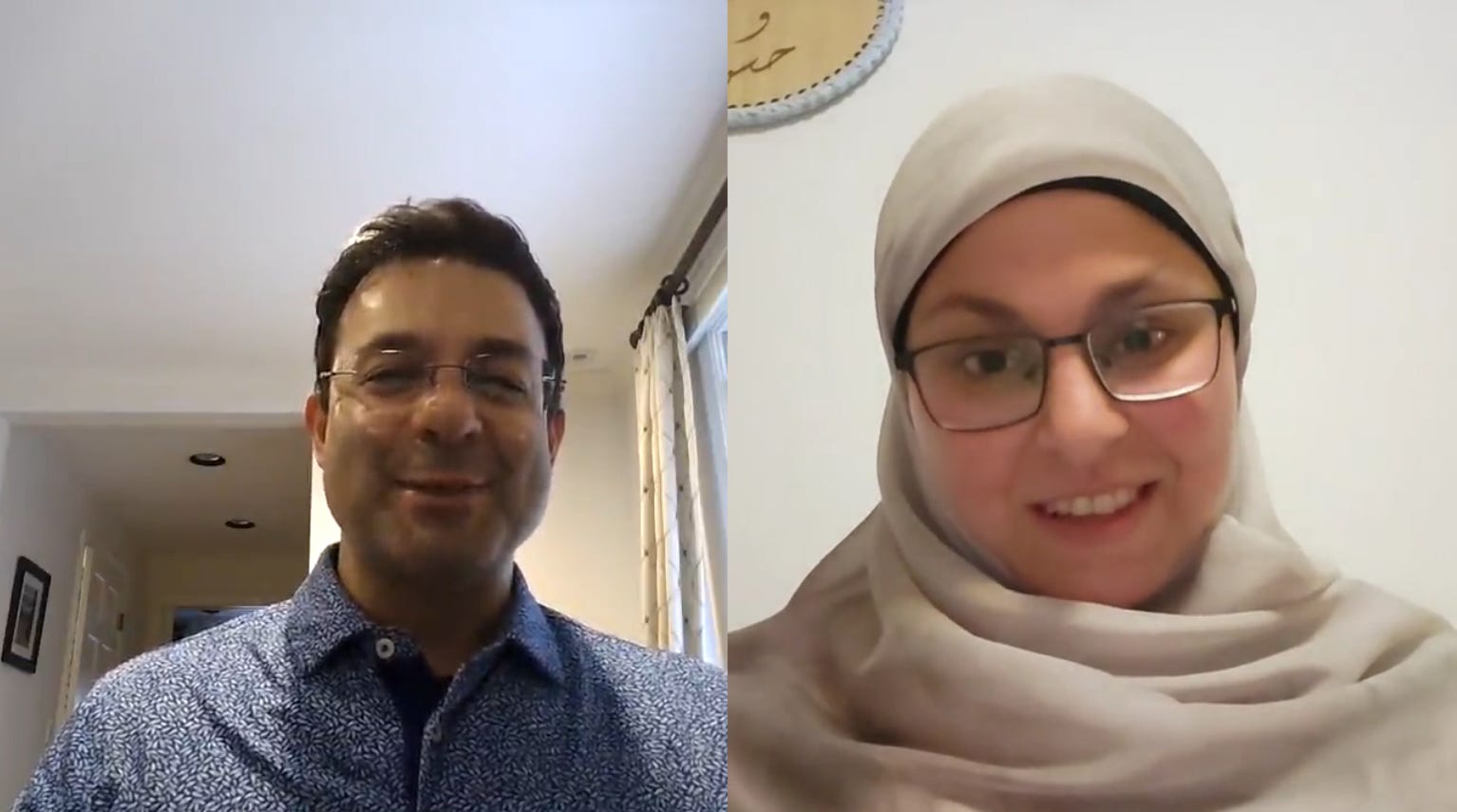
Human medical critical thinking - the ability to diagnose, analyze, and reason through a case - is such an important skill. Do you think AI could eventually replicate that kind of critical thinking?
So I think there is some data to show that it can be superior to human thinking in certain contexts, given certain tasks. So the answer is yes, as far as that goes. But the caveat is that those studies and that data have been generated under certain conditions, and those conditions are not always true within real-world clinical scenarios. And so I think we need to gather more data, do more studies, and find out how this generalizes across a patient population and different presentations. And so that gets back to what I said earlier, where if you look at a specific instance or specific question, it can work as good or better than a human, but when you try to generalize it or extrapolate across a wider patient panel, I don’t think it holds up, at least right now. So that’s sort of where we are.
Anyone today can build an AI tool, but many of them produce unreliable or completely wrong results. From a physician’s perspective, what does it actually take to build a successful, working AI tool?
So I think for working tools, I would first start with the problem that’s trying to be solved. So the person that’s creating that tool has to be very clear about what is the problem, and what do I think is the potential solution for the problem. And so, once you have that problem identified, then it’s a matter of saying, okay, who are the people that really know this problem well, and how can I get information from those people to inform the solution that I’m building. So I think that’s where I would start from. And then, once you have that information, it’s a matter of developing a working prototype or something that you can sort of beta test and get some feedback on, and find out is this something that could potentially solve the problem, and what is it going to take to improve upon this and get it better. If it’s a technology solution, you might need to really enlist the help of experts to create that, because it’s true that we have a lot of tools at our fingertips in terms of making AI apps or making websites, all these kinds of things, but at the end of the day, the more robust that tool is, and the more it’s going to integrate within a healthcare workflow, the more you have to really weave in other experts - whether that’s IT experts or a true software engineer or coder - to get that product to really work well. And then you have to go through the steps of plugging it into the healthcare IT infrastructure to get that tool to work well. And that’s not always easy to do, or a smooth process, because to get something to sort of be tried out in a real clinical context takes a lot of regulatory approvals and committee approvals before you can actually try it.
Given how much data AI now has access to, do doctors still believe in the term ‘idiopathic’ - or could AI eventually explain conditions we currently can’t?
That’s interesting - I haven’t thought about that question, nor have I heard it, but I think within the current limitations of the AI tools that we have out there, there still will be things that are idiopathic, that we don’t know what causes. I think the challenge that we have to look out for is that the way these AI tools are trained is that they want to give you an answer, and they want to make you feel happy that you’re continuing to interact with them and ask them a question and solicit feedback or an answer. So there is this temptation for the AI to be biased a little bit in that regard, and to sometimes guess at an answer when it doesn’t know. And I think that’s something that also really distinguishes between AI and the human - we tend to have a much easier time of saying we don’t know, or labeling a condition as idiopathic, whereas the AI may just guess and go out on a limb. And I think that can sometimes be dangerous. So I think that’s where we are at present - that there’s still things that are idiopathic. But whether we get there, let’s say ten years, fifteen years from now, where fewer things are idiopathic and AI can really give us some true answer within some type of confidence interval, remains to be seen. But my guess is that biological processes are so complex that there still will be a subset of cases that even the AI is not able to know, and it’s just going to perhaps be able to narrow it down to a few things - say it could be any one of one, two, three — and then the human has to layer in their judgment and context.
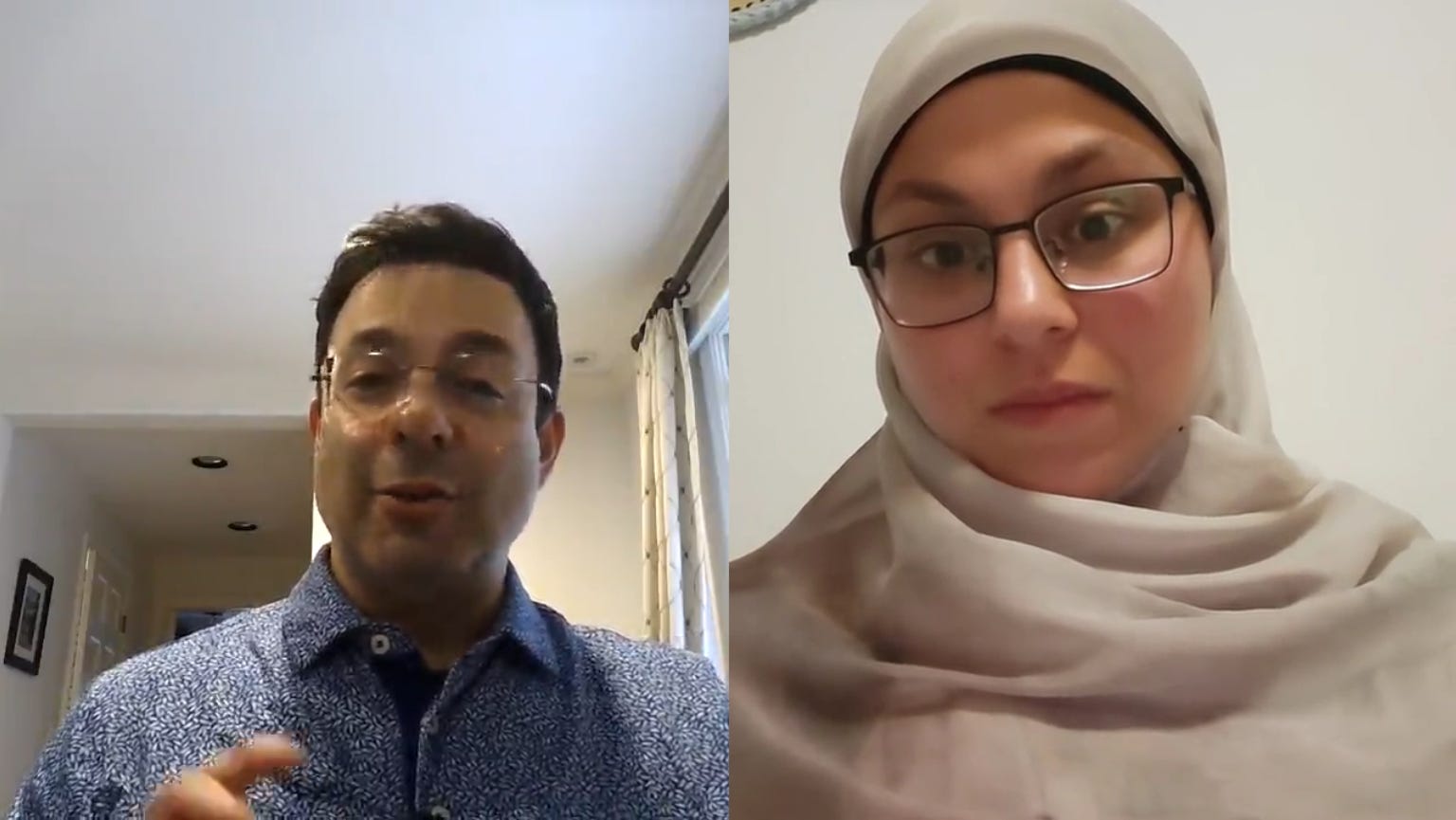
If a patient tells you they used AI to diagnose themselves, how much do you trust that tool or its results? And if you were the patient, would you rather be diagnosed by AI or by a doctor in the traditional way?
So I suspect that patients will have their own preferences, and that it’s not going to be totally uniform for what they would like. I think from my perspective, I always like patients to be educated and informed. I think it really drives better outcomes when they are coming to the table with an educated perspective, and if the AI tools get them there faster, I’m all for it. What I like is to form my own independent opinion of the case in front of me and the patient in front of me, and then I will consult the AI tool, see what the AI says, and then take that into consideration - but always have the final judgment rest on my shoulders. And I think that a lot of patients would appreciate that as well, because they don’t necessarily think that their doctor’s not doing any thinking or reasoning, just trusting a computer or a software and then going to say what it thinks is the right thing. But at the end of the day, I think it’s really a combination of the AI knowledge and tool and the doctor’s knowledge - it’s just a question of how you want to sequence that. But I think that many physicians, at least the ones that I’ve talked to, are pretty receptive to patients showing up in the clinic having already consulted and talked to Chat GPT or Claude. And so I think that’s fine, and I think they like to think about it as a way to sort of streamline their visits, because the patients are already pre-educated coming into the clinic. Then it’s a matter of the doctor driving the conversation and saying, here’s what I think given the totality of all the information that’s out there. What’s in my brain, what’s in the computer and the AI, and let’s bundle it all together and come up with a diagnosis and treatment plan for you.
How far can AI go wrong, and how far can a human doctor go wrong, when it comes to diagnosing a patient?
So the AI can make mistakes. The AI can certainly hallucinate answers and diagnoses and things like that. I’ve read some cases where unfortunately the AI told a patient to drink a poison, or something like that - really dangerous things. And so I think these tools really have to be taken with a grain of salt. And that’s why, again, I advocate for having a human in the loop, where you’re always sort of passing something by the doctor to make sure that they approve. But the AI can really span the range in terms of what it tells you. And oftentimes it will tell you things that are really beneficial - things that are as good as what the physician would tell you. But it’s really unpredictable how good it’s going to be, and I don’t think we have enough experience yet to say in what cases you can trust it and in what cases you can’t. And then the humans - we have our limitations, of course, also. We’re not perfect, and we have certain biases that we can be susceptible to. But I like to think of the AI as being something of a safety check, or a double check, or a second set of eyes that can hopefully help take away some of those biases, or resurface some things that we hadn’t considered or thought of. And then we say, wait a minute, I missed this, or I was wrong because of XYZ, and the AI reminded me of that, and now I can go ahead and make the right diagnosis. So the summary statement is that mistakes can occur in either context, but I think if you take all the information together, hopefully you’re decreasing your chances of making a mistake overall.
A professor I spoke with recently said he’s worried that medical students relying too heavily on AI won’t develop strong critical thinking skills. How concerning is that idea to you - and if that’s a risk for students, why do we encourage patients to use AI for their own education?
It’s a great question, and I think it is something that I’m worried about. I’m worried about it because if medical students start to rely too much upon AI early in their journey, they may not develop that core body of knowledge that they need as a physician, because you do need to have a baseline understanding of knowledge to serve as the foundation of your decision making, your judgment, your experience. And the clinical rotations that you have build upon the knowledge that you’ve learned about in your preclinical years. And so if you rely too much upon AI to give you the answer, and you’re not sort of downloading that knowledge into your brain, you’re missing that part of it. And then also, if you rely too much upon it to give you answers, you may lose your ability to do critical thinking, as you said. And also communication, right? Because communication skills are built through talking with other students, talking with teachers, talking with patients. And if you rely too much upon the interface electronically, that part of it may atrophy as well. And so if you lose some of that knowledge, you lose some of the critical thinking ability, then you’re just going to become too dependent upon the technology, and you’re not going to be able to really provide those guardrails and those safety rails for patient care down the line when you’re actually seeing patients. And I think that can be extrapolated to many things in day-to-day life, not just clinical care. But if you use AI too much, then your ability to think independently and critically could atrophy away. So I am concerned about that - like, how are people going to approach it and use it? And so I would hope that in medical education, we’re still emphasizing the rigorous way of training that we have been in the past, but that we sort of implement AI education on top of it, so that people learn how to use these tools smartly and judiciously at the right time, without over-relying on them.
If a doctor uses AI to design a study and generate the results, how much can we trust those results - and who deserves the credit, the doctor or the AI?
It’s a good question. I’m not quite sure, because there’s certainly a lot of attention being paid right now towards how to augment clinical trials with either virtual patients or simulated patients, and generate data that way. But I think we have to look at it in a new way of human working hand in hand with the AI. And we have to be transparent about how the research was done, what role the AI played in the research. And I think if the AI helps to accelerate the data capture process, I think it’s probably a good thing. But we want to make sure that the AI doesn’t introduce any bias into the study, that all the methods are transparently disclosed, as I mentioned. And I think that the researcher gets the credit, but just acknowledging that the AI was part of that process, and how it was used. But I think the scientific community is going to have to weigh in on that as time goes on. And I know that the peer-reviewed journals that publish these research studies are starting to develop their own criteria for how authors disclose how they used AI in the writing of articles or in the performance of research. And each one of those journals has its own independent discretion for how they do that. But I think the scientific community is going to have to wrestle with these questions as time goes on, because AI is becoming very powerful and can really serve as a good adjunct for these research studies.
If AI can predict and prevent disease, how much do you think it could reduce disease progression overall?
Yeah, that’s something that has a lot of power for AI - preventative medicine. I think that when we think about precision medicine or personalized medicine, and using AI in that application, it can be very powerful, because if you’re able to catch a disease much earlier, of course you can treat that earlier and potentially have better outcomes and decreased morbidity and mortality. I think it has a lot of power to do that. I think, especially in my world with diagnostic imaging, we would love to see a world in which AI combined with medical imaging - for example, screening tools like mammography, or lung cancer screening CT, or even AI-assisted colonoscopies, things like that - where we have augmented our screening technologies and we catch disease earlier in a lot of people and can really have an impact on survival. So I think it’s tough to quantify that right now and say how much of an impact it’s going to have. But I think it will have a pretty significant impact as the technologies get better and better, as they permeate practices more and more. And so I’m very excited about that component - how do we think about screening populations of people more efficiently with AI and catching that disease earlier? And that could also be extrapolated, let’s say, to blood tests - looking at blood markers or genetic markers that predispose people to disease. How can AI be used in those assays and in screening those samples? Those are all very exciting areas of development, and I think we’re going to see a shift towards that as time goes on, because historically we’ve always had reactive medicine, treating the condition once it’s popped up. And I think now the pendulum is going to swing a little bit more towards the preventative side of things, emphasizing catching disease upstream.
AI has been progressing for years, yet we still don’t have proper treatments for cancer and other chronic diseases. Why hasn’t AI had more of an impact there so far?
Yeah, I think a lot of this has to do with the excitement and the hype around AI, contrasted with how long it actually takes for something to have data behind it, and then, once it has data behind it, get approved through the regulatory pathway, and then enter into clinical workflows and have acceptance and clinical adoption. That pathway tends to be pretty long, and so I think that’s part of the reason why it doesn’t feel like it’s as impactful as we think it should be. I think there’s that length of the healthcare life cycle, from the idea or the concept, all the way to implementation in the clinic. And so I think that’s part of it. And I think another part of it is just the expense behind some of these solutions, because it costs a lot of money to do trials and develop this software and things like that. And then it also costs a lot of money to implement that in the practice. And we’re still working on getting reimbursement pathways built to implement a lot of those. And if you don’t have the reimbursement pathway, the question becomes, who’s going to pay for it? Is it going to be the patient paying for the AI? Is it going to be the doctor? Is it going to be the insurance provider, right? And so those things can also limit how that’s adopted in clinical care. And when you limit that, you’re also going to be providing a little bit of a bottleneck around gathering more data around how these technologies work. So I think those things, all combined, just kind of stretch out that timeline for how long it takes until you have the real-world impact that you expect to see.
There’s a real AI gap between developed countries and low- and middle-income countries, and patients in those countries are still suffering from diseases AI has helped address elsewhere. How can the medical community help close that gap?
Yeah, I think that’s a great opportunity for AI to step in and provide some care to these low and middle-income countries. I think a lot of this is going to be facilitated by telemedicine or virtual care, where you have, for example, care provided at low to zero cost to patients that need it in underserved areas - and whether that’s going to be AI augmenting the virtual care, or whether it’s going to be AI serving as the sole medical care, you have to somehow create a construct around that, like what is it going to look like from a liability perspective, from an access perspective. But if you imagine that AI could be good enough, let’s say, to provide care for 80% or 90% of certain patient encounters or routine sort of issues, then you could make that accessible and available to the people in these countries. They could just utilize that and understand that this isn’t a substitute for full-service, bona fide medical care, but it’s at least something, and something is better than nothing to help them at least get some level of understanding of what to do. Or maybe it’s even like a triage thing, where they say, use this software, and if it elevates the risk level of what I’m describing up to a certain point, then I know I need to seek out in-person medical care. And then it’s going to be a matter of how you build that infrastructure around those patient visits, because you have to make sure, of course, you have computers, you have the software, you have the internet access - you have all of those things which would need to be built out. But I think that’s a really exciting extension of the AI wave - how do you create, for example, a virtual AI doctor or chat bot to help out people in underserved communities that really have a strong access issue to healthcare.
You mentioned working on AI triage in clinical trials - how does that actually work?
So what I meant by that was, I do trials where we look at AI software that’s in development. So if you have, for example, a software that wants to detect a lung nodule on a chest CT, they would ask me to evaluate how well that tool is doing at identifying that nodule, measuring it, and reporting it, compared to what I would do. And so that’s how it is - I would say, okay, the software did pretty good here, but here’s how I would adjust its output, and so on and so forth, to try to help that software better approximate what I would do as a physician. No, that’s not the way that I was using it, but I do think there are some companies out there that are looking at some variation of that, where they’re asking how the AI can be layered onto the trial itself and do some of the steps. But I haven’t personally been involved in that particular piece.
Scott F. Cameron, MD is a practicing radiologist, AI implementation leader, angel investor, and MRS Past President. He writes about physician career architecture at Physician Vantage Studio.
https://aparajitasrivastava.substack.com/p/the-tragedy-of-unused-strength?utm_source=share&utm_medium=android&r=8y8c41